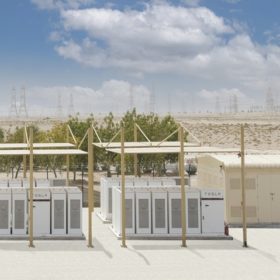
Tesla’s storage facility comes online at Mohammed bin Rashid solar park in Dubai
The 1.21 MW/8.61 MWh storage facility is the second battery deployed at the 5 GW solar park. The system allows bi-directional charging.
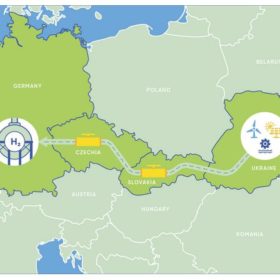
The Hydrogen Stream: Hydrogen highway through Central Europe
Elsewhere, the German government wants to allow the testing of hydrogen production from offshore electricity, while a French consortium intends to promote the use of hydrogen at airports and build a European airport network to accommodate future hydrogen aircraft. Furthermore, the Port of Rotterdam is increasing its efforts to become a hydrogen hub.
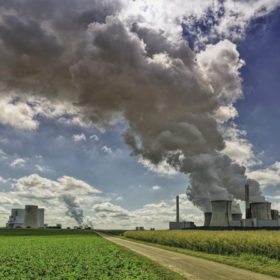
China holds the key to cancelling half the world’s new coal project plans
With pressure mounting on the world’s governments to turn their back on the fossil fuel, China and peers in South East Asia, Europe and South Asia could help deliver a coal-free future at the COP26 climate summit planned in Glasgow in November.
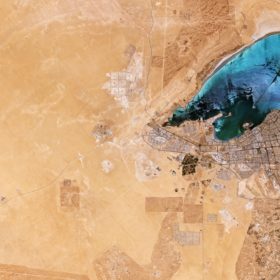
Proposals received for latest version of delayed Kuwaiti gigasolar project
With the Dabdaba/Al-Dibdibah solar field now having been combined with the Shagaya clean energy development, bids for the former’s EPC contract were reportedly received last week. It is unclear whether the facility will have a generation capacity of 1 GW, 1.5 GW or ‘up to 3 GW.’
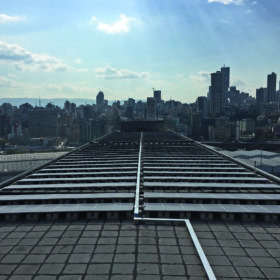
The weekend read: Will Lebanon’s solar rise?
A year after a sudden explosion in Beirut killed more than 200 people, destroying solar installations in the port and sending the country into a complete downfall, a question emerges: Can Lebanon use this experience to set its economy on a new sustainable pathway, supported by a viable energy sector? Solar energy offers some lessons.
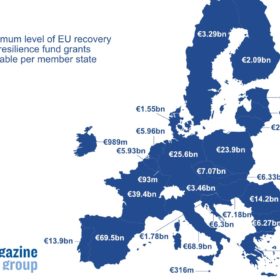
EU to start auctioning green bonds next month
An independent third-party has approved the European Commission’s safeguards to ensure the projects in member states financed by €250 billion of green bonds over the next five years, will have genuine emission reduction credentials.
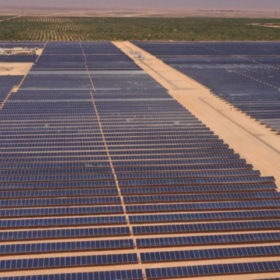
Locally-made panels used in 50 MW Jordanian solar project
The Al Husainiyah solar plant, 200km south of Jordanian capital Amman, began commercial operations a week ago with more than 200,000 panels manufactured by 30% joint owner Philadelphia Solar.
TotalEnergies to build 1 GW solar park in Iraq
TotalEnergies plans to build a 1 GW solar plant near the port of Basra, in southern Iraq.
Novel battery chemistry for zinc-ion batteries
Scientists have demonstrated a zinc-ion battery that overcomes many of the challenges for this technology. By working with a highly-concentrated salt solution as the electrolyte, the group was able to achieve stability over more than 2,000 cycles combined with a strong electric performance. The group says that its work opens up “a viable route to developing aqueous batteries for emerging electrochemical energy storage applications.”
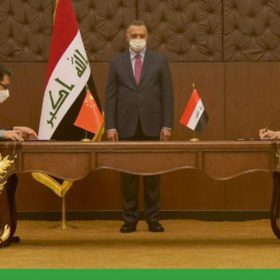
Iraq announces another 2 GW solar project
Under development by Chinese conglomerate Power China, the project will initially have a capacity of 750 MW.
