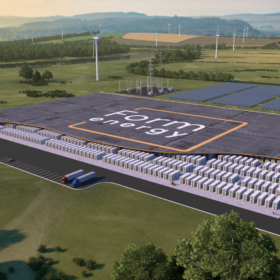
Google to deploy world’s largest iron-air battery for US data center
Google plans to deploy a 300 MW/30 GWh iron-air battery system in Minnesota under an agreement with Xcel Energy, pairing it with 1.6 GW of new wind and solar.
Uncovering attitudes towards agrivoltaics via community engagement
An American research group has conducted a pilot workshop for agrivoltaics stakeholders in Arizona, including farmers, developers, government officials and indigenous leaders. A reflection paper offers some key takeaways for future public participation.
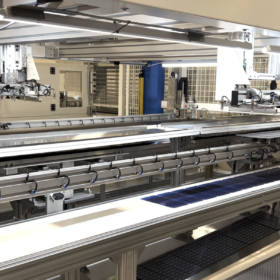
Heliene expands solar module capacity with new 500 MW Minnesota plant
Heliene has opened a 500 MW solar module manufacturing line in Rogers, Minnesota, bringing its total US capacity to 1.3 GW. The facility has been operational since April.
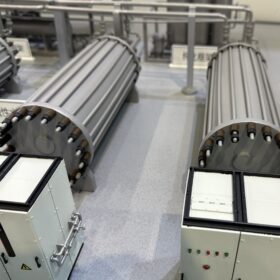
The Hydrogen Stream: US researchers explore trapped geologic hydrogen
US researchers have started studying hydrogen formation in the Midcontinent Rift in the United States, while Dutch scientists have discovered that hydrogen emissions from industrial complexes are higher than previously estimated.

Powering restaurants with rooftop PV, reversible fuel cells
Researchers have simulated the operation of bifacial PV and proton exchange membrane reversible fuel cells across restaurants in five different US states. Taking into account varying rates of bifacial PV’s rearside gains, they found that LCOE was as low as $0.029 per kWh.
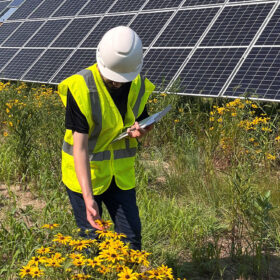
US solar sites linked to higher levels of insects
Scientists conducting a five-year research project in southern Minnesota have observed a tripling of insect numbers near two solar facilities built on rehabilitated agricultural land. They say the findings show how habitat-friendly solar could help protect insect populations and improve pollination in nearby agricultural fields.
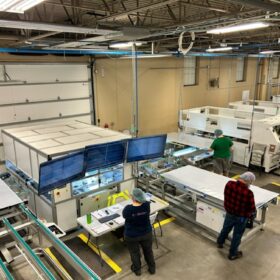
Heliene expanding PV production in US market
Heliene has invested about $10 million to expand its manufacturing and assembly line in the US state of Minnesota.
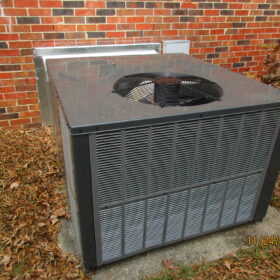
Research shows heat pumps perform better than fossil fuel heating in mild cold climates
A British research group has aggregated information from seven field studies on heat pumps from around the world and has found air-source devices have an average coefficient of performance (COP) of 2.74 when temperatures are above −10 C. Below that, COP is between 1.5 and 2.
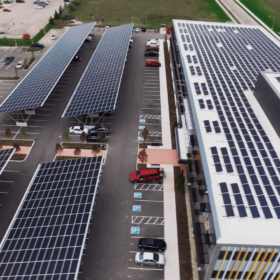
Heliene plans to manufacture 1 GW solar modules, 1.5 GW solar cells in the U.S.
Canadian-based Heliene plans a new factory in Minnesota that will begin producing modules in 2024 and cells in 2025.
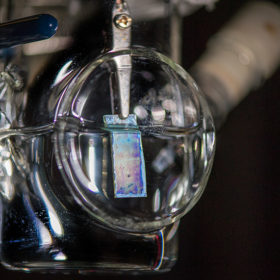
The Hydrogen Stream: Standardized measurements for solar water-splitting
NREL and Berkeley Lab have proposed efficiency and stability best practices for solar water-splitting to make hydrogen, while a team of researchers from Malaysia and Pakistan have revealed their findings on the feasibility of hydrogen-based incineration.
