
Bridging the gaps
The collapse of module prices in 2023 has fueled speculation around just how much PV supply is held in European warehouses. How big the stockpile is depends on who you ask but such a broad spectrum of opinion shows there is room for improvement in how the solar industry shares data.
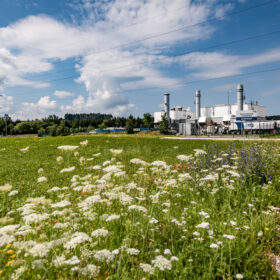
The Hydrogen Stream: Rising demand driving blue hydrogen plans
Air Products has announced plans for Europe’s largest blue hydrogen production plant, while RAG Austria says it has commissioned “the world’s first 100% hydrogen storage facility in a porous underground reservoir.”
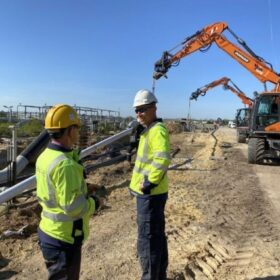
The Hydrogen Stream: Netherlands starts building hydrogen network
The Dutch authorities have started building a national hydrogen network, while Fortescue has acquired a 12.5% stake in Norwegian Hydrogen.
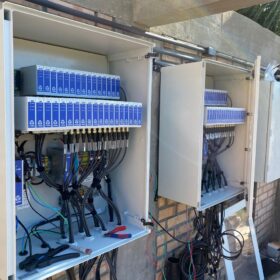
New performance measurement kit for outdoor testing of bifacial, perovskite solar modules
To perform a wide range of tests on new types of PV modules under realistic conditions, EKO Instruments has introduced PV Blocks, an expandable all-in-one type of system with capacity for up to 32 modules. It is targeted at research labs, module manufacturers, and testing organizations.
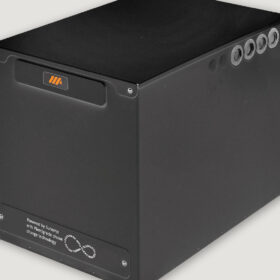
Triple Solar introduces residential thermal battery
Dutch company Triple Solar has launched a residential thermal battery with a heat loss rate ranging from 0.67 kWh/day to 0.84 kWh/day. The new product can reportedly provide hot water at temperatures ranging from 45C and 55C, with the minimum heat source temperature ranging between 65C and 80C.
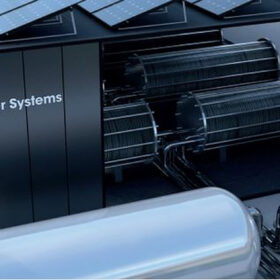
Dutch startup optimizes Edison battery for industrial hydrogen production
Battolyser Systems has improved the efficiency of its Edison battery for industrial hydrogen production. The Dutch startup said the levelized cost of hydrogen (LCOH) could be cut to €1.50 ($1.58) per kilogram by 2025. It has partnered with the European Investment Bank to support its expansion, with ambitious plans to hit 1 GW of production capacity by 2026.
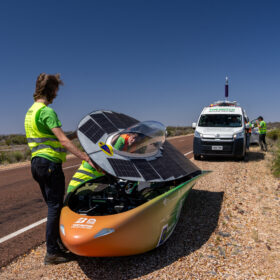
Perovskite-silicon tandem tech from Oxford PV tested in solar race car
A team of Dutch university students under the banner Top Dutch Solar Racing has installed perovskite silicon tandem cells in its entry in the 16th edition of Bridgestone World Solar Challenge. The upcoming race is a six day, 3000 km expedition across the Australian continent, from Darwin to Adelaide.
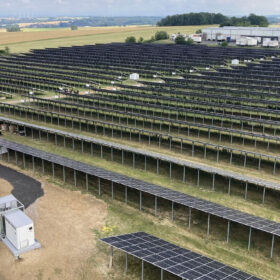
Netherlands allocates $440 million for utility-scale batteries
The government of the Netherlands has allocated €416.6 million ($439.5 million) to fund the construction of utility-scale batteries connected to ground-mounted solar farms or large rooftop PV systems.
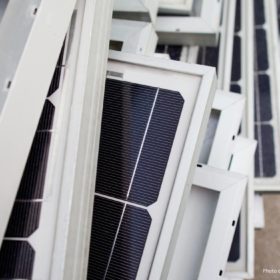
Netherlands raises solar panel recycling fee to ‘absorb shocks’ in market
PV module importers in the Netherlands saw the solar module recycling fee increase from €6.50 ($6.8) per ton to €40 per ton in July. In a chat with pv magazine, Jan-Willem Jehee, operations manager at Stichting Zonne-energie Recycling Nederland (ZRN), explains the money generated from the fee hike will be used to finance a guarantee fund that would ‘absorb shocks in the market should one occur.’

The race for 100% solar
With utility scale solar installations accelerating, Philip Wolfe, founder of PV data consultancy Wiki-Solar, drills into the data to highlight some interesting variations in relative progress around the world.
