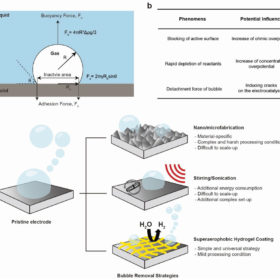
The Hydrogen Stream: New hydrogel for bubble detachment in hydrogen production
South Korean researchers have published a new study on the use of hydrogel to remove gas bubbles in hydrogen production, while Shell has revealed that it will continue with its hydrogen investments in the Netherlands, Vestas, meanwhile, said it will launch a pilot project to use hydrogen in a crew transfer vessel.

Smart solar window based on thermochromic laminate
Dutch researchers have developed a solar window concept that blocks heat from the sun in warm weather and absorbs heat during colder periods.

New residential battery from the Netherlands
Dutch startup Charged has developed a lithium-ion battery with a storage capacity of 5 kWh. It can be stacked in a six-unit configuration to reach 30 kWh. It measures 400 mm x 500 mm x 200 mm and weighs 45 kg.

Tennet to build 40 new high-voltage stations in the Netherlands
The Dutch transmission system operator said that more grid capacity is needed to address the continuous growth of wind and solar energy, as well as that of electromobility and heat pumps.
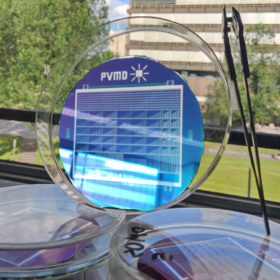
Solar cells integrating power electronics
Researchers in the Netherlands investigated the potential for integrating power electronics in solar cells in the form of diodes, transistors, capacitors, and inductors. They believe that this kind of PV cell may initially find applications in PV-powered Internet-of-Things (IoT) devices and later, as the economy of scale kicks in, in large-scale applications.
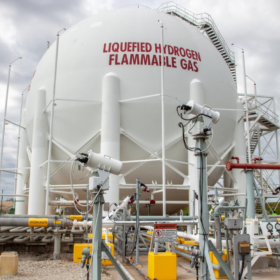
The Hydrogen Stream: Romania calls for green hydrogen projects
Romania has unveiled a state aid scheme to support investments in the production of hydrogen powered by solar, hydro and wind, while Air Products and Gunvor have agreed to build a hydrogen import terminal in Rotterdam.

Netherlands to build 10 GW national network for green hydrogen
The Netherlands is planning a €1.5 billion ($1.6 billion) green hydrogen network that will consist of 85% recycled natural gas pipes. It is expected to go online in 2027.
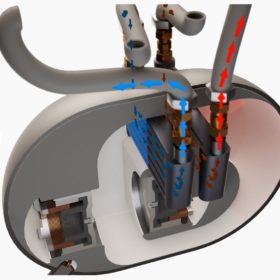
Thermo-acoustic heat pump for residential applications
Dutch researchers have developed a heat pump that can be used in combination with rooftop solar generation, due to its modulating capabilities and temperature flexibility. It measures 55 cm x 55 cm x 55 cm and has an output of 6 kW.

Hanwha appeals French court decision over Longi seizure
South Korea’s Hanwha says it has appealed a decision to reverse the seizure of products from a Longi Solar distributor in France in February 2021.
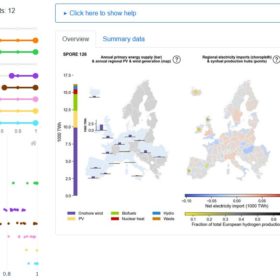
Open-source online platform shows how Europe may become energy-independent with renewables by 2050
European researchers have developed an open-source online tool that can identify areas where renewable energy and synthetic fuels can be cost-effectively produced, where hydrogen hubs could be built, and where grid expansion is needed. It can be used in different sectors across 35 countries.
