
US International Trade Commission says that Section 201 tariffs should be extended
The issue now moves to President Joe Biden who will decide whether or not to extend the tariffs beyond their February 2022 expiration.
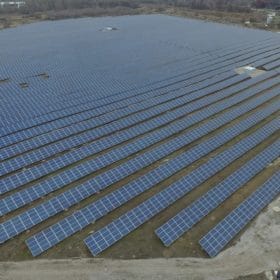
A net-zero Canada would need 1.6 GW of solar per year from now on
Clean energy trade group the Canadian Renewable Energy Association has told policymakers CA$8 billion worth of solar and wind projects will be needed each year to decarbonize the electricity supply by 2035 and remove net emissions by mid century.

Hunting the sun with Harris hawks optimization algorithm
An Iranian-Canadian-based research group has conceived a nature-inspired algorithm to estimate the model parameters of PV systems. The proposed tool mimics the exploring, exploiting and attacking strategy of the Harris hawk, a bird of prey species that cooperates when hunting.
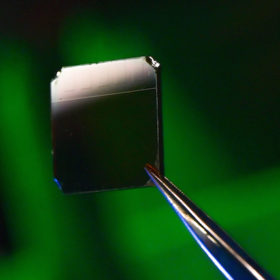
Ultra-thin 2D perovskite solar cell with 18.3% efficiency
The solar cell was built with a layer of organic cations between the iodide on top, and lead on the bottom enhanced interactions between the layers. Its creators designed the device after they discovered that, when the sunlight hits a 2D perovskite, it contracts the space between atomic layers in the material.
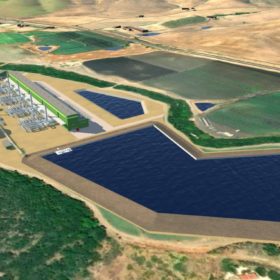
Hydrostor plans 400 MW / 3200 MWh compressed air energy storage in the U.S.
The plant would be able to deliver 400 MW of electricity for 8 hours, and would be comparable in size to some of California’s largest fossil fuel power plants.
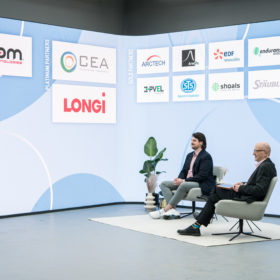
Roundtables USA: Accelerating solar deployment – video now available
Industry leaders, policymakers, and stakeholders joined pv magazine senior editors in an insight-packed live event to discuss optimizing solar PV and accelerating deployment across the U.S. and the globe.
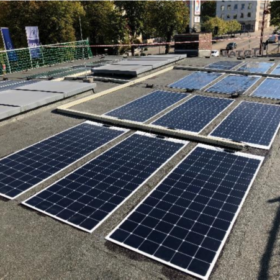
As Maxeon waits on potential U.S.-based solar cell fab, it launches Air panels in Europe
Maxeon exec Mark Babcock joined pv magazine to talk about Maxeon’s Air solar panels, and the company’s possible U.S. manufacturing expansion.

First Solar signs multi-year deals for 5.4 GW of modules
Lightsource bp and bp placed orders for around 4.4 GW of modules, with options for an additional 1 GW.
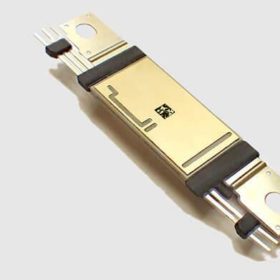
New efforts to bring silicon-carbide inverters closer to commercial maturity
U.S. multinational automotive supplier BorgWarner and U.S. semiconductor company Qorvo have both announced new plans to further develop their respective silicon carbide technologies. The latter has acquired New Jersey-based silicon carbide semiconductor provider United Silicon Carbide and the former wants to scale up its inverter technology for electric vehicles.
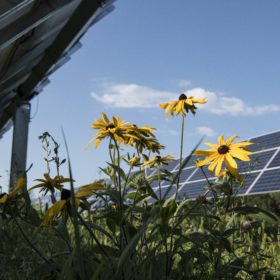
Clearinghouse to connect farmers and solar developers with agrivoltaics information
The platform was launched by the National Center for Appropriate Technology. The clearinghouse features a library of peer-reviewed information, videos, podcasts, news, and a forum for agrivoltaics discussion.
