
Australian developer secures approval for 1 GW green hydrogen and battery project
Renewables developer Edify Energy has been granted development approval to build and operate a green hydrogen production plant of up to 1 GW, as well as a behind-the-meter solar and battery storage facility within the Lansdown Eco-Industrial Precinct in Townsville, northern Queensland.
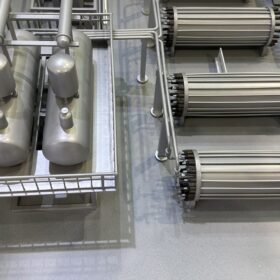
Australian scientists seek to verify tech claimed to improve hydrogen fuel cell efficiency by 60%
From pv magazine Australia Queensland’s University of Technology (QUT) is working on verifying Titan Hydrogen’s claims its patent-pending technology will “effectively double” vehicles’ driving ranges by enabling a fuel cell to produce more electricity from the same amount of hydrogen. The Australian-based company claims its technology could increase the capacity of fuel cells by up […]
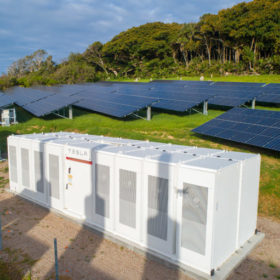
Solar microgrid makes remote Australian island less dependent on diesel
Until this year, Lord Howe Island was totally reliant on diesel generation for its electricity. A solar-powered hybrid microgrid, integrated into the island’s supply since April, has now been declared a resounding success.
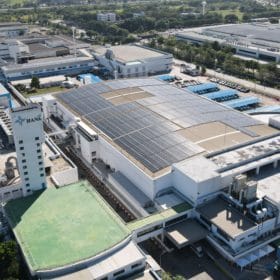
Solar on new-build homes has significantly shorter payback period
A report by BloombergNEF and Schneider Electric has pressed the case for governments to unlock the world’s potentially huge rooftop solar potential, and cited California’s solar mandate as a shining example.
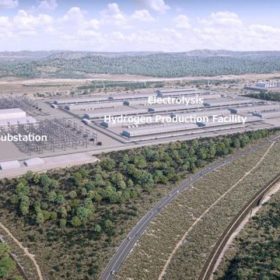
Australian generator teams with Japanese on 3 GW green hydrogen project
The Australian state of Queensland’s aim to become a leading producer and exporter of green hydrogen has received a boost, as state-owned electricity generator Stanwell has teamed up with a group of Australian and Japanese companies to launch a feasibility study for a proposed large-scale production and export project.
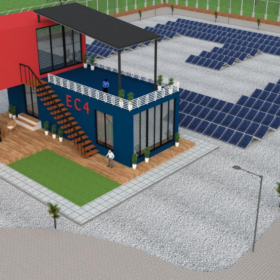
Off-grid data center powered exclusively by PV in Australia
Edge Centres – a data center operator based in Queensland, Australia – has announced its first off-grid, 100% solar-powered facility in the state of Victoria.
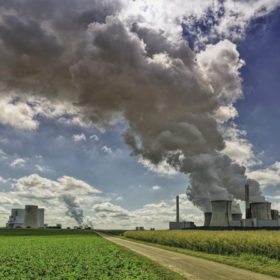
China holds the key to cancelling half the world’s new coal project plans
With pressure mounting on the world’s governments to turn their back on the fossil fuel, China and peers in South East Asia, Europe and South Asia could help deliver a coal-free future at the COP26 climate summit planned in Glasgow in November.
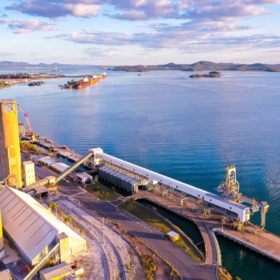
Developers move forward with GW-scale PV-wind-storage project in Australia
A couple of years ago, the Australian state of Queensland became a beacon to advisory Energy Estate and international renewables developer RES Group. The Moah Creek Renewable Energy Project, the first stage of their gigawatt-scale plan, is now about to be introduced to the community.
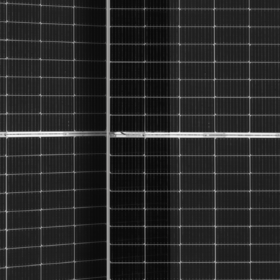
JinkoSolar’s n-type TOPCon cell achieves 24.58% efficiency via hydrogenation treatment
The Chinese manufacturer and the University of New South Wales (UNSW) have improved the average cell efficiency by 0.68% through a post-cell hydrogenation process. The cell’s average open-circuit voltage increased by 7 mV from 696 to 703 mV, and the average fill factor from 82.03% to 83.07%.
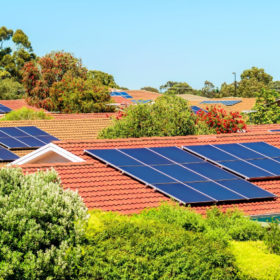
South Australian electricity network’s rooftop PV trial set for launch
Since July 2020, SA Power Networks has been refining technology and stakeholder engagement mechanisms to enable dynamic solar exports to the grid, potentially ending an era of severe export limits on new customers in rooftop-solar-rich parts of the South Australian network and other jurisdictions.
