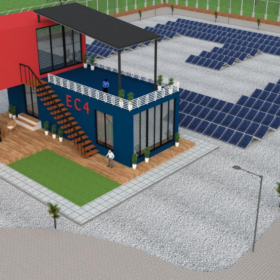
Off-grid data center powered exclusively by PV in Australia
Edge Centres – a data center operator based in Queensland, Australia – has announced its first off-grid, 100% solar-powered facility in the state of Victoria.
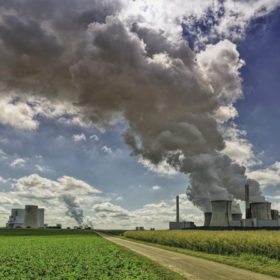
China holds the key to cancelling half the world’s new coal project plans
With pressure mounting on the world’s governments to turn their back on the fossil fuel, China and peers in South East Asia, Europe and South Asia could help deliver a coal-free future at the COP26 climate summit planned in Glasgow in November.
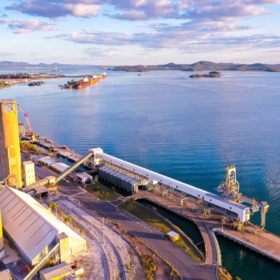
Developers move forward with GW-scale PV-wind-storage project in Australia
A couple of years ago, the Australian state of Queensland became a beacon to advisory Energy Estate and international renewables developer RES Group. The Moah Creek Renewable Energy Project, the first stage of their gigawatt-scale plan, is now about to be introduced to the community.
JinkoSolar’s n-type TOPCon cell achieves 24.58% efficiency via hydrogenation treatment
The Chinese manufacturer and the University of New South Wales (UNSW) have improved the average cell efficiency by 0.68% through a post-cell hydrogenation process. The cell’s average open-circuit voltage increased by 7 mV from 696 to 703 mV, and the average fill factor from 82.03% to 83.07%.
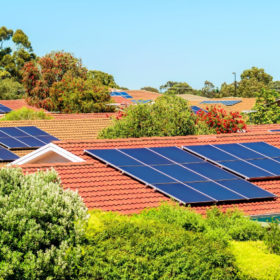
South Australian electricity network’s rooftop PV trial set for launch
Since July 2020, SA Power Networks has been refining technology and stakeholder engagement mechanisms to enable dynamic solar exports to the grid, potentially ending an era of severe export limits on new customers in rooftop-solar-rich parts of the South Australian network and other jurisdictions.

Australian startup sets 25.54% efficiency record for silicon cell
SunDrive said it has created the most effective commercial-sized silicon solar cell in the world, achieving an efficiency figure of 25.54% in testing carried out by Germany’s Institute for Solar Energy Research (ISFH).

Hydrogen-powered vehicles to enter Australian market
Startup H2X is banking on bringing automotive manufacturing back to Australia with hydrogen. After it unveiled its Warrego pickup truck last week, pv magazine Australia caught up with the company’s corporate affairs specialist, Tony Blackie.
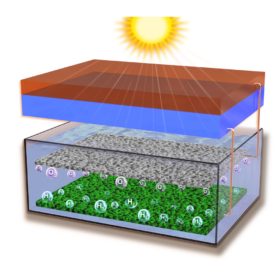
Direct solar hydrogen generation tech powered by 24.3%-efficient tandem perovskite-silicon solar cell
Developed by Australian scientists, the demonstrated system is claimed to achieve a solar-to-hydrogen efficiency of 20% at a levelized cost of hydrogen (LCOH) of $4.10/kg. The direct solar hydrogen generation technology is powered by a tandem perovskite-silicon solar cell with an unprecedented high open-circuit voltage of 1.271 V, and a power conversion efficiency of 24.3%.
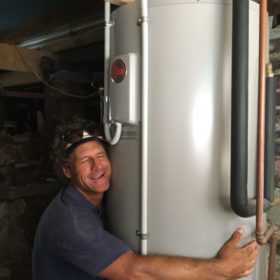
Rooftop PV for water heating – a residential super saver
Off-peak electricity rates in Australia are quickly becoming an unhelpful price signal for rooftop solar owners, who benefit by self consuming their excess solar ahead of drawing electricity from the grid at any time of day.
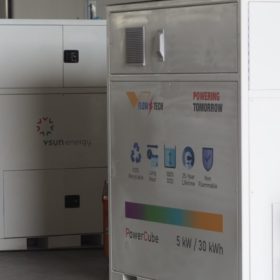
VSUN reveals redox flow battery tech in Australia
The suitability of vanadium redox flow battery technology for Australian residential and commercial applications will soon be tested, as Perth-based storage specialist VSUN Energy plans to deploy three 5 kW/30 kWh flow batteries.
