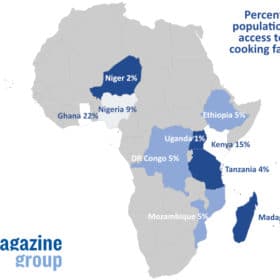
Universal electricity access by 2030 remains a distant dream
Energy efficiency, electrification of heating and transport, and the provision of clean cooking facilities are all going in the wrong direction as the Covid crisis deprived millions in sub-Saharan Africa of electricity use, according to a report by the IEA, IRENA, WHO, World Bank and UN Statistics Division.
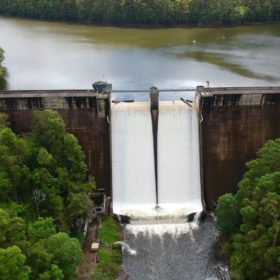
Development of 1 GW pumped hydro project progresses in Australia
The state government in Queensland, Australia, has announced plans to finance design work and cost-related studies for the construction of a new pumped hydro facility.
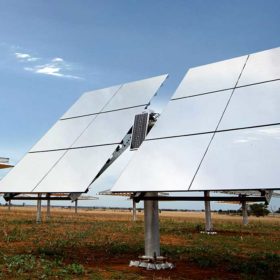
Australia to host 50 MWh ‘solar hydro’ plant with storage
RayGen Resources has secured funding to build a 3 MW/50 MWh ‘solar hydro’ power plant that could become one of the largest, lowest-cost storage projects in Australia.

Australian research prompts rethink on silicon heterojunction cell production
Defect engineering for silicon heterojunction solar cells has come a long way. But Matthew Wright, a solar researcher at the University of New South Wales, asks whether these proven efficiency gains could be applied more effectively.
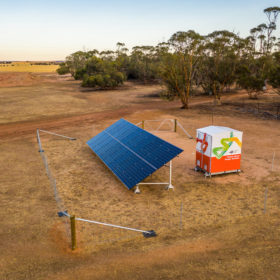
New factory for standalone solar+storage systems in Australia
Solar and microgrid specialist Hybrid Systems Australia has revealed plans to establish the “world’s biggest” standalone power system manufacturing facility in Western Australia.

Registrations of interest open for Australia’s 8 GW renewable energy zone
Australia’s largest renewable energy zone is one step closer to fruition with the New South Wales Government calling for registrations of interest from developers of solar PV, wind and energy storage projects.
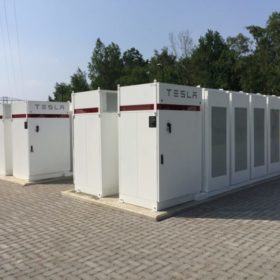
Australia can power renewable energy age, says Tesla
Tesla said it plans to heavily invest in raw materials from Australia for its batteries. The company said the nation now has the chance to secure a more lucrative slice of the global supply chain as the world transitions to renewable energy.

ARENA CEO floats ambitious new goals for Australia’s future electricity system
Darren Miller, the chief executive of the Australian Renewable Energy Agency, says he expects Australia to become a “shining example” of how a country can produce more clean electricity than it actually needs.
Batteries boom in Australia as renewable investments decline
The Clean Energy Council says investors are shying away from large renewable projects in Australia, as government intervention has created uncertainty and grid risks are tough to quantify – even with a prized connection agreement in hand.
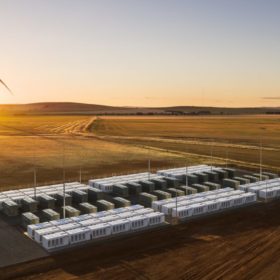
Australia’s energy storage installed base to grow more than five times by 2030
In its latest report, IHS Markit predicts that energy storage installations in Australia will grow from 500 MW to more than 12.8 GW by 2030. Today, Australia makes up less than 3% of total global installations for battery energy storage and is the seventh largest market globally. By 2030, it is forecast to comprise 7% of global installations and become the third largest market. This growth will be largely driven by three distinct market segments: residential, standalone front-of-the-meter, and collocated with utility-scale renewables.
