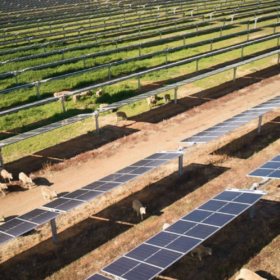
Australia’s Dinawan solar farm among 14 projects in state investment round
The proposed Dinawan solar farm in Australia is one of 14 energy projects worth AUD 34 billion ($23.9 billion) endorsed in the first round of the New South Wales state government’s Investment Delivery Authority program.
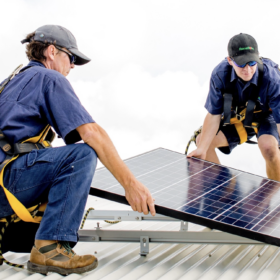
AI energy management system to unlock VPP potential
Researchers at the University of New South Wales (UNSW) and installer Aussie Solar Batteries will develop and test AI-driven energy management platforms to optimize solar and battery systems and support virtual power plant (VPP) deployment.
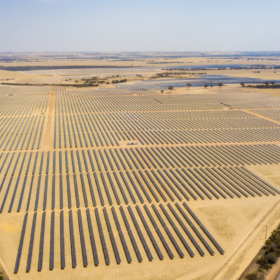
Australia’s utility solar and wind output hits 5 TWh in February
Output from Australia’s large-scale renewable energy sector continues to climb with the nation’s utility PV and wind assets generating a total of 5.0 TWh in February, delivering an 11% increase on the same time last year.
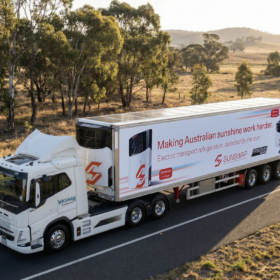
PV-powered refrigerated trailer completes long-distance Australian trial run
Protran Solutions says a battery-electric refrigerated trailer charged by onboard solar panels has completed a 1,671 km Sydney-Brisbane round trip without diesel use, demonstrating depot-to-depot cold-chain capability.
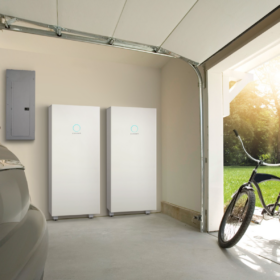
Australian regulator ramps up battery inspections
Solar battery installers have been warned to “do it once and do it well” as the number of batteries installed across Australia under the federal government’s Cheaper Home Batteries Program surges past the 250,000 milestone, delivering a combined 6.3 GWh of capacity.
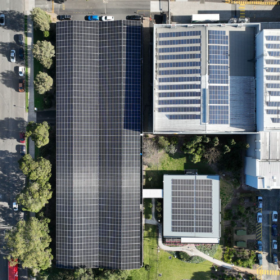
UK grid software cuts MV solar connection quotes to 15 minutes
A new automated platform allows commercial and industrial rooftop solar developers to receive medium-voltage connection assessments from network operators in 15 minutes.

Australian startup scaling up printed solar technology
Kardinia Energy has secured AUD 2.15 million from the Australian government’s Industry Growth Program to scale up its flexible, low-cost printed solar technology from university proof-of-concept to pilot manufacturing.
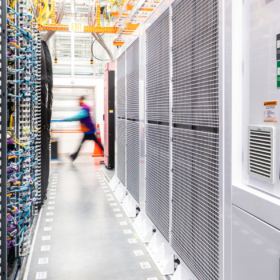
Industry alliance calls for 100% renewables for Australian data centers
An alliance of 11 industry, environmental and union groups has urged the Australian federal government to require new data centers throughout the country to secure 100% additional renewable energy and fund workforce training as a condition of approval.
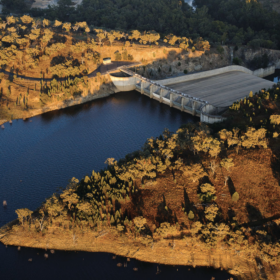
Australian state backs pumped hydro as long-duration energy storage
The New South Wales government in southeastern Australia has granted priority status to two large-scale pumped hydro projects, providing long-duration energy storage (LDES) to strengthen grid reliability.
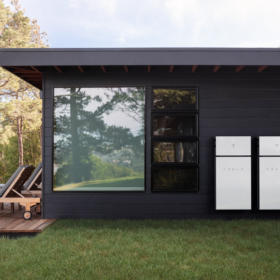
Home batteries reshape Australia’s national electricity market
Small-scale behind-the-meter storage is beginning to reshape peak demand in the Australian National Electricity Market (NEM), raising the prospect of a “Bactrian camel curve” in which evening load is split. Within six months of Australia’s Cheaper Home Batteries Program, small-scale storage capacity could supply up to half the peak output of the Eraring coal-fired power station.
