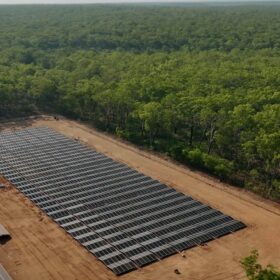
Construction begins on 1.2 MW modular PV plant in Australia
Modular PV array manufacturer 5B is deploying its preassembled, relocatable modular solar tech in a solar and battery energy storage project on Bathurst Island, Australia.

Fortescue continues US expansion with new clean energy manufacturing plant
Australian mining and green energy major Fortescue has revealed plans to establish a new clean energy technology manufacturing plant in the United States, as it looks to take advantage of the US Inflation Reduction Act (IRA).

BP advances 100 MW green hydrogen project in Australia
BP will look at deploying a 100 MW electrolyser to produce renewable hydrogen for Australia and export markets. It aims to transform its former Kwinana oil refinery site in Western Australia into a green fuels hub.
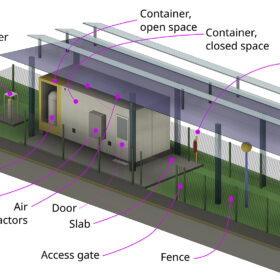
PV-driven microgrid for hydrogen, cooling
The University of French Polynesia has built a PV-driven hydrogen generation unit that combines a hydrogen chain with a thermochemical unit. The latter is used to recover waste heat from the electrolyzer and fuel cell to enable deferred cooling production for air conditioning.
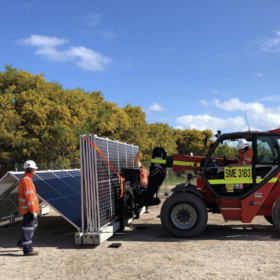
Former Sun Cable CEO to lead Australia’s 5B
Former Sun Cable CEO David Griffin has been appointed to the top job at Australian modular PV array manufacturer 5B, where he will oversee the rollout of its solar energy solutions.
Balancing the books on big solar’s weather risk
In this pv magazine Webinar panel discussion, we will discuss how to future-proof utility-scale solar and balance risk allocation across stakeholders, including technological and operational choices that can be made to mitigate extreme weather risks.
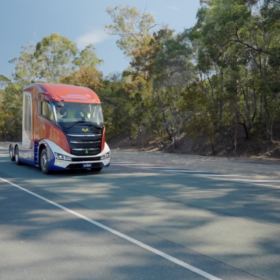
Pure Hydrogen launches Taurus hydrogen fuel cell truck in Australia
Australia’s Pure Hydrogen says that its Taurus hydrogen fuel cell prime mover is now available for sale.
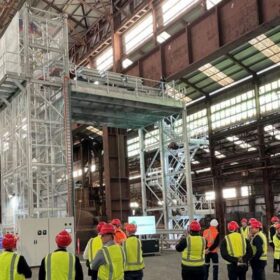
Green Gravity signs deal for energy storage tech in Romania
Green Gravity, an Australian energy storage startup, says it will explore opportunities to deploy its gravitational energy storage technology in Europe, after signing an agreement with Romanian state-owned energy producer Complexul Energetic Valea Jiului SA.
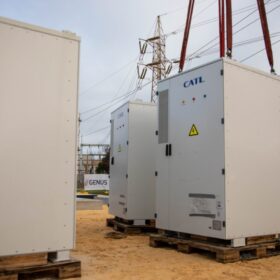
Quinbrook targets 10 GWh battery rollout after signing CATL supply deal
Australia’s Quinbrook Infrastructure Partners has signed a supply deal with Chinese battery manufacturer CATL that is expected to support the deployment of more than 10 GWh of energy storage systems over the next five years.

Perovskite-silicon tandem cell achieves 28.9% efficiency via high bandgap top perovskite cell
A group of international researchers has developed a new perovskite-silicon solar cell design using a top perovskite PV device with an energy bandgap of 1.67 eV and a new self-assembly monolayer based on carbazole. The tandem cell achieved a higher efficiency compared to counterparts without the monolayer and passed the IEC 61215 standard thermal cycling test.
