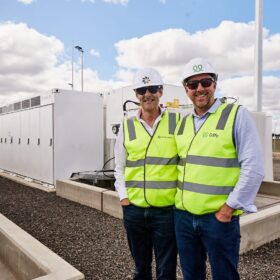
Edify Energy switches on 150 MW/300 MW of battery storage in Australia
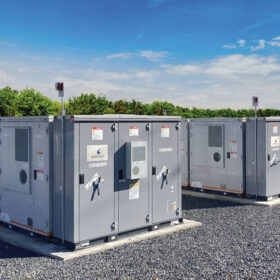
Construction has been completed on what is now the largest battery system in the Australian state of New South Wales. The 150 MW/300 MWh Riverina and Darlington Point energy storage systems are made up of three co-located units, owned by Federation Asset Management and Edify Energy.
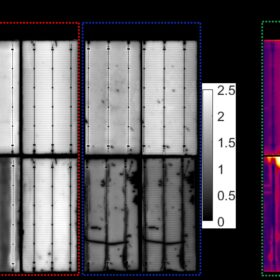
Scientists warn of heat-induced failure risks in HJT glass-backsheet PV modules
University of New South Wales researchers have identified four failure modes caused by damp heat in heterojunction solar panels with a glass-back sheet configuration. The failures could result in power losses ranging from 5% to 50%.
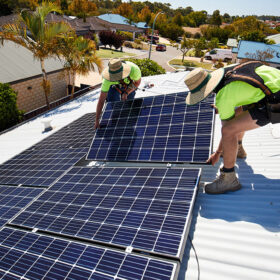
Australia’s cumulative installed PV capacity tops 29.7 GW
The International Energy Agency expects Australia’s “outstanding” economic fundamentals for residential and commercial rooftop solar will see the sector stabilize in 2023 after a new report revealed the PV market contracted in 2022, when the country added 4 GW of installed solar power.
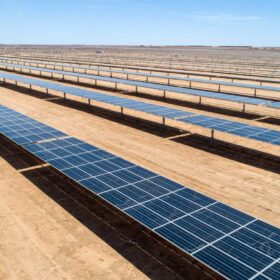
Australian authorities assign 1.12 GW of PV in renewables tender
The New South Wales state government in Australia has announced the successful projects of its first tender under the Electricity Infrastructure Roadmap. Developers will build two major solar farms, a wind farm, and an eight-hour battery energy storage system to manage the phase-out of coal-fired power generation from the state’s grid.
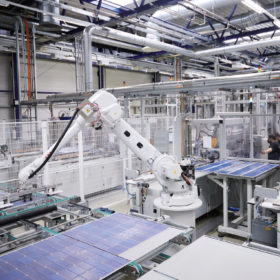
Swiss manufacturer enters Australia with heterojunction solar module
Swiss solar module manufacturer Meyer Burger will enter the growing Australian PV market by offering a range of high-performance solar panels that it claims deliver greater energy yields than traditional technologies.
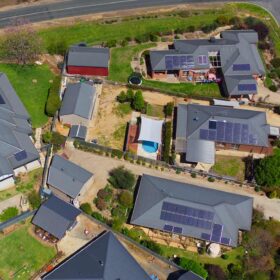
Solar generation high sparks record lows across Australia’s energy grid
Record solar generation from large-scale and rooftop PV is driving down the wholesale cost of energy, reducing emissions to record lows, and helping to set new records for minimum demand for electricity from the grid, according to the Australian Energy Market Operator (AEMO).
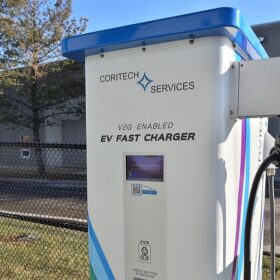
Adaptive control of V2Gs incorporating EV owner expectations
Australian researchers have developed a novel adaptive decentralized control strategy for electric vehicle (EV) integration, incorporating both microgrid and EV-side conditions into the primary frequency control. They have proposed new indices to evaluate the charge and discharge capabilities of EV batteries, as well as the satisfaction levels of EV owners.

Fire at Australian solar farm
A fire broke out on Monday at the 110 MW Beryl Solar Farm in New South Wales, Australia, causing damages that are still being assessed. Emergency services were able to quickly bring the blaze under control and the unaffected areas of the solar farm are now back online.
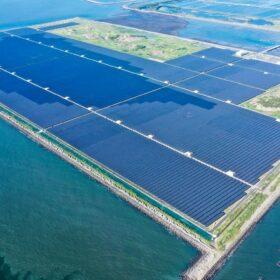
Taiwan’s largest solar plant goes online
Vena Energy says it has commissioned the largest PV project in Taiwan. It says its 272 MW E2 Solar Project will account for 4% of the island’s annual solar output.
Weekend read: Pathfinders for grid stability
Non-synchronous renewable energy affects grid stability but storage-as-transmission (SAT) assets offer grid companies a trump card. Whether it’s “virtual transmission” in Australia, Germany’s “Grid Booster” program, or the giga-scale pipeline of projects emerging in the United Kingdom, energy storage is finding a way.
