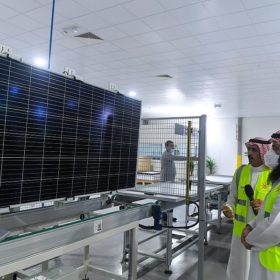
Solar module factory with 1.2 GW capacity inaugurated in Saudi Arabia
The production equipment for the factory was provided by Spain’s Mondragon Assembly. The facility is currently the largest module factory in the Middle East.
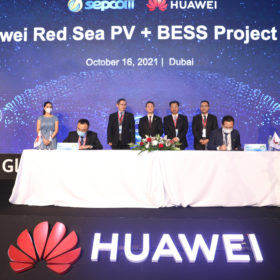
Huawei wins major energy storage project contract in Saudi Arabia
Chinese tech giant Huawei Digital Power has signed a contract with China’s SEPCOIII, a construction and engineering company and power plant operator, for a 400 MW PV plus 1300 MWh battery energy storage project in Saudi Arabia. Developed by ACWA Power, with SEPCOIII serving as general contractor and handling EPC services, the Red Sea Project […]

Lowest shortlisted bid in Saudi third PV tender was $0.0148/kWh
The shortlisted developers are Jinko Power, Total, ACWA Power, Alfanar, and a consortium formed by Masdar and EDF.
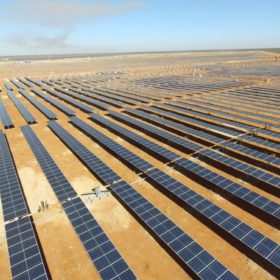
PVH supplies trackers to 300 MW PV project in Saudi Arabia
PV Hardware (PVH) is supplying its PV trackers to China Energy Engineering Group (CEEC) for a 300 MW PV project in Rabigh, Mecca.

Novel battery chemistry for zinc-ion batteries
Scientists have demonstrated a zinc-ion battery that overcomes many of the challenges for this technology. By working with a highly-concentrated salt solution as the electrolyte, the group was able to achieve stability over more than 2,000 cycles combined with a strong electric performance. The group says that its work opens up “a viable route to developing aqueous batteries for emerging electrochemical energy storage applications.”
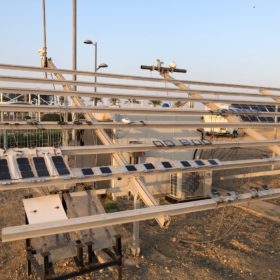
Tracing the roots of fill factor degradation in perovskite-silicon tandem solar cells
Scientists in Saudi Arabia have conducted one of the longest tests on the stability of perovskite-silicon tandem solar cells. According to their findings, the most affected parameter under the hot and humid climate of the region is the device fill factor, which dropped from 80% to 50% in just six months.
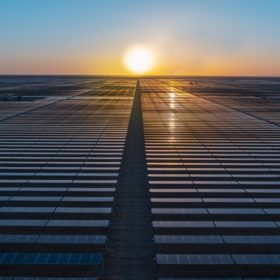
Financial close for 1.5 GW solar PV project in Saudi Arabia
The Sudair Solar PV plant is the first project under the renewable energy program run by Saudi Arabia’s Public Investment Fund. The facility is owned by energy giants ACWA Power and Aramco, as well as electricity holding company Badeel.
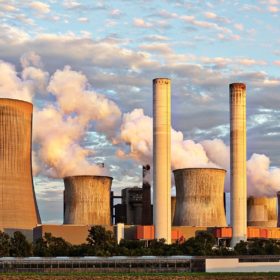
The trillions spent by G20 nations on fossil fuels between 2015 and 2019 could have paid for more than 4 TW of solar at today’s prices
Polluting energy sources received more than $3 trillion from the EU and 19 of the world’s largest national economies over that four-year period, despite G20 members having pledged to phase-out fossil fuel subsidy and address climate change back in 2009.
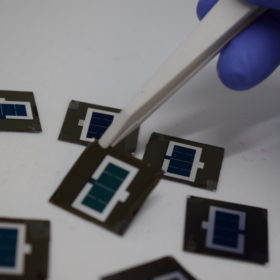
n-type perovskite tandem cell hits 27% efficiency
Scientists demonstrated a perovskite-silicon tandem cell that reached 27% conversion efficiency. Though higher tandem cell efficiencies have been achieved, this represents a big jump in efficiency for those utilizing n-i-p architecture, which previously had not surpassed 22%.
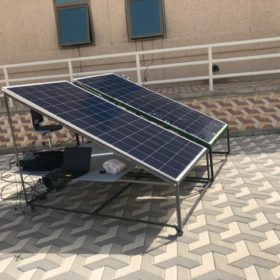
Solar module cooling techniques for the desert
Saudi scientists have tested several cooling technologies for solar panels and have found that active techniques work better than passive ones under harsh climatic conditions. The most effective one consists of a system based on four heat pipes immersed in a box of liquid, as liquid bulk, integrated with the back of the solar panel.
