Renewables-powered heat pump for district heating
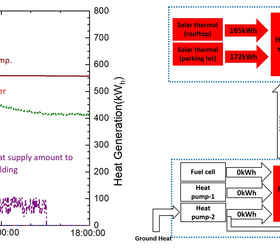
South Korean researchers have developed a heat trading system including a ground-source heat pump, solar thermal collectors, a fuel-cell system, and two heat storage tanks for district heating at hours of peak solar production.
Forecasting model to manage renewables-powered grids
Scientists in South Korea have developed a forecasting model to better manage electric grids with high penetration of intermittent renewables. The model was tested using historic data from Pennsylvania-New Jersey-Maryland (PJM) grid in the United States, and shown to accurately forecast the availability of renewable energy resources up to one day in advance.
Perovskite alkylammonium chloride solar cell achieves 26.08% efficiency
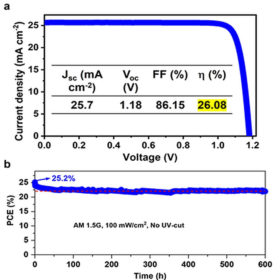
The US National Renewable Energy Laboratory (NREL) has certified that a South Korean research team has achieved a 25.73% efficiency rating with a perovskite PV cell based on alkylammonium chlorides. The champion device built by the scientists reached an efficiency of 26.08%.
Trina Solar, Hanwha Qcells reach settlement on patent dispute
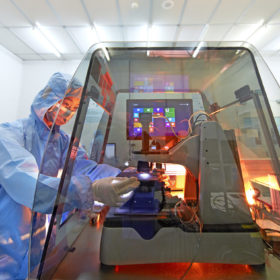
Hanwha Qcells and Trina Solar say they have signed a patent licensing and transfer agreement with each other to end a dispute over their intellectual property.
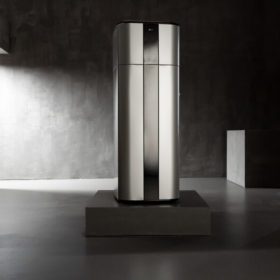
LG unveils heat pump for water heating
LG has developed an air source heat pump with the capacity to heat 200 liters to 270 liters of domestic water. It uses R134a as a refrigerant and the pump has a coefficient of performance (COP) of up to 3.85.
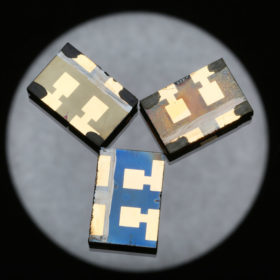
A look into a crystal ball reveals the secrets of perovskite solar cell stability
Scientists in Switzerland and South Korea looked deep into the crystalline structure of a perovskite thin-film to better understand the mechanisms behind the sensitivity to heat and moisture that causes so many stability issues for solar cells based on these materials. They discovered a part of the crystal’s surface that is particularly vulnerable to moisture-induced degradation, and developed an approach to grow perovskite thin-films with strong resistance to moisture and thermal stress.
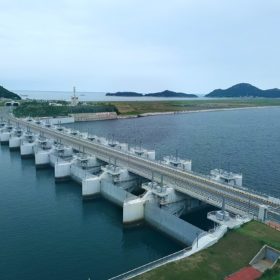
New model to predict safety of floating solar arrays
South Korean scientists have developed a way to determine when a floating PV system is safe to install in the field.
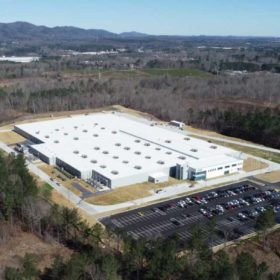
US Patent Trial and Appeal Board rules in favor of Q Cells in patent dispute with REC
The US Patent Trial and Appeal Board has issued a favorable decision for Hanwha Q Cells over REC Solar’s patent claims. The court has ruled that the contested claims of REC’s US patent were not patentable. The decision is similar to those in courts in China and Europe, according to Q Cells.
Trina sues Hanwha Q Cells for patent infringement in China
Trina Solar has filed a patent lawsuit related to several products developed by Hanwha Q Cells, and has revealed that the Chinese customs authorities have already seized some of them.
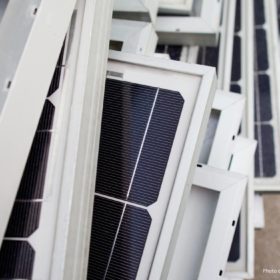
South Korea moves forward with long-expected solar panel recycling scheme
South Korea’s new provisions establish a standardized collection system for each of the country’s major regions, in order to ensure a waste panel recycling/reuse rate of more than 80%.
