
Inverted perovskite solar cell achieves 22.31% efficiency via novel electron-accepting interlayer
A Korean research group has built an inverted perovskite cell that is able to retain 91.7% of its initial efficiency after 1,000 h under standard illumination conditions. They built the device with an electron-accepting interlayer that also acts as charge transport.
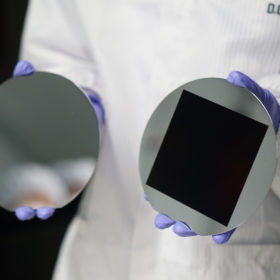
Wafer scale microwire solar cell with 21.1% efficiency
Korean scientists have built a wafer scale radial junction solar cell with tapered microwires and a surface passivation layer made of aluminum oxide. The device showed the highest power conversion efficiency among the previously reported microwire solar cells.

South Korean government begins nationwide inspection on solar parks
South Korean authorities have already identified 2,267 cases of illegal subsidy use for renewable energy plants. They also ascertained that agrivoltaic projects presented as such had no agricultural activities being implemented.
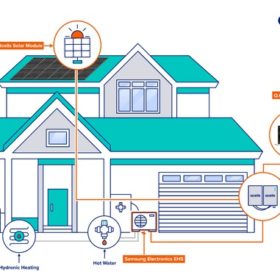
Hanwha Q Cells launches residential solar-storage-heat pump solution in Europe
Hanwha Q Cells has combined its solar panels and batteries with Samsung’s heat pumps. The offering includes an app that reportedly optimizes power consumption while maximizing solar power utilization.
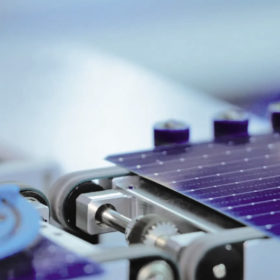
Improving n-type TOPCon solar cells
Scientists in China have studied the formation of contacts in tunnel-oxide passivated contact (TOPCon) solar cells, and the role of high-temperature annealing processes on the quality and performance of cells. Their findings could open up pathways for scientists looking to squeeze even more efficiency out this rapidly growing cell technology.
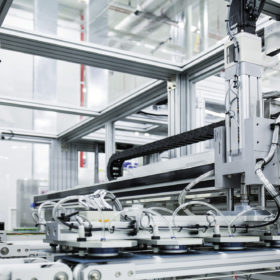
Hanwha Solutions to set up TOPCon module production line, build EVA factory
Hanwha Solutions has unveiled a $548.8 million plan to enter the TOPCon module business and expand its EVA production capacity in South Korea.

South Korea reduces size limit for PPA market to 300 kW
Korea Electric Power Corp. will act as a sales intermediary under South Korea’s so-called K-RE100 scheme.
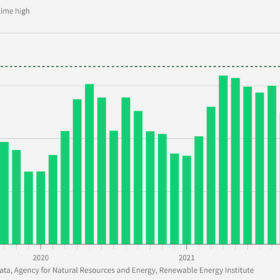
Japan and South Korea set solar records
The month of May saw Japan and South Korea set a new benchmark for solar electricity generation, according to a London-based think tank, but PV is still dwarfed by fossil fuel-powered electricity in the two countries.

The Hydrogen Stream: Dye-sensitized photocatalyst promises most efficient solar water splitting to date
Japanese researchers have developed a new way to improve water splitting, while South Korea has completed its largest hydrogen production complex. Scotland and England have announced new hydrogen investments, and Uzbekistan and Saudi Arabia’s ACWA Power have agreed to collaborate on hydrogen projects.
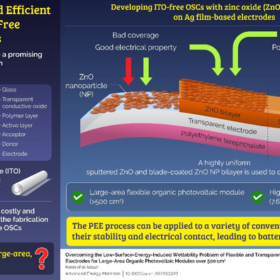
ITO-free organic solar cells for large modules
Researchers in South Korea have reported success in developing large-area, indium tin oxide-free, flexible organic solar cells. Their zinc oxide bilayer-based organic solar cells demonstrated an efficiency of 7.67% for a module area of 528 square centimeters.
