
What happens when type-C cracks strike photovoltaic modules
An international research team used high-resolution electroluminescence imaging to quantify type-C cracks in 100 PV modules after 11 years of operation, linking crack distribution to real-world power loss. Concentrated cracks within individual cells were found to cause disproportionately high losses, highlighting the importance of cell-level crack analysis for effective PV maintenance.
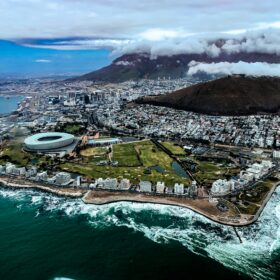
South Africans are ‘off-gridding’
Research exploring off-grid practices in South Africa has defined three forms of off-gridding, with reasons for being off-grid varying depending on income background, in turn highlighting that decentralized energy transitions can reproduce existing inequalities.

Private 660 MWh solar-storage project closes financing in South Africa
Naos‑1 is described as South Africa’s biggest private utility‑scale solar and battery storage project, designed to wheel power to industrial customers.
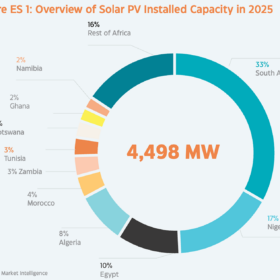
Africa installed 4.5 GW of solar in 2025, says Global Solar Council
The Global Solar Council’s Africa market outlook report says the continent saw its fastest year for solar growth to date in 2025. Its medium-term outlook forecasts Africa to install over 31.5 GW of solar by 2029, with distributed and utility-scale markets set to continue their expansion across an increasing number of countries.

Chad’s installed PV capacity hits 110 MW, supplying 37% of electricity
Chad has one of Africa’s highest solar penetration rates, a result of a small power system with just 12% electrification, as large-scale solar and storage projects gather pace around N’Djamena, even as political uncertainty over oil revenues constrains faster deployment.

Senegal’s solar capacity hits 671 MW
Senegal has reached an 84% electrification rate, with 294 MW of residential PV installed, while several large-scale solar-plus-storage projects are under development, despite the start of production at the Sangomar gas field.
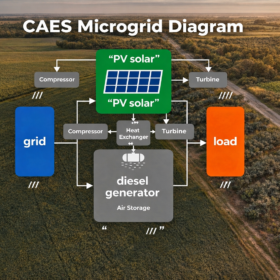
How to combine C&I solar with compressed air energy storage
Researchers have studied the potential of combining photovoltaic systems with compressed air energy storage (CAES) to power a commercial building in South Africa. They found that a co-optimized system could lower total capital costs by 15–20% compared to traditional sequential sizing approaches.
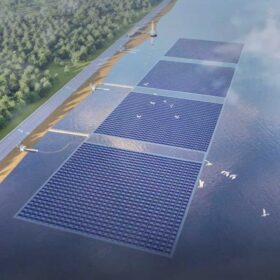
Nigeria awards first floating PV project
The 7 MW solar array will be built by the Nigerian unit of China Civil Engineering Construction Corporation after the company won a contract awarded by Nigeria’s Rural Electrification Agency.
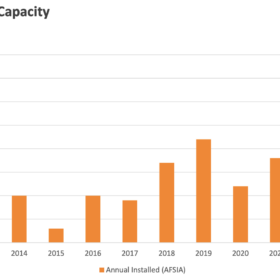
Africa’s installed PV capacity estimated above 63 GW
The Africa Solar Industry Association (AFSIA) has now identified 23.4 GW of operational solar projects across the continent but when taking into account Chinese PV export data, estimates total installed capacity in Africa could reach over 63 GW.
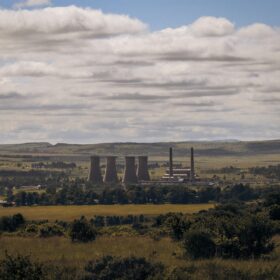
Eskom launches tender for 17 MW solar plant
The South African energy utility is seeking applicants to provide design and engineering, procurement and construction (EPC) services, as well as operations and maintenance services for a solar PV plant at its Duvha Power Station with a minimum 17 MW AC capacity and a maximum evacuation capacity of 30 MW AC on a site with an environmentally authorized land of 35.2 hectares.
