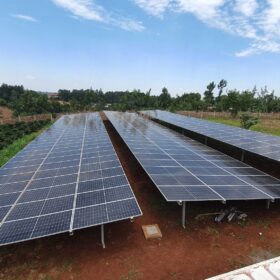
Kenya’s first hybrid solar-hydro plant goes online
Located near Nairobi, the project consists of a 150 kW solar array, a 50 kW crossflow turbine and a 240 KWh storage facility. SolarNow director and CFO Ernst Vriesendorp told pv magazine that despite the project’s humble size, it has ‘large’ benefits.
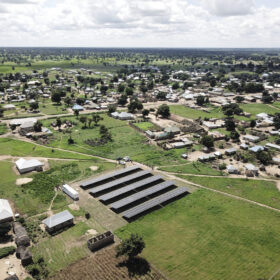
Hybrid PV-biogas microgrids for EV charging
An international research team has examined the potential use of hybrid microgrids that integrate PV and biogas for electric vehicle recharging in Karnataka, India. Their findings indicate that this combined approach offers economic and environmental benefits compared to separate biogas and PV systems.

Mauritius seeks consultants for 30 MW floating solar plant
The Mauritian government’s Central Electricity Board (CEB) is inviting consultancy firms to pitch their bids on conducting a feasibility study into developing a 30 MW floating solar PV farm at Tamarind Falls Reservoir in the archipelago’s southwest.
New model for day-ahead solar forecasting in areas with limited data
South Korean researchers have developed a long-term solar irradiance prediction method based on a reinforcement learning algorithm. They claim that the new model is able to forecast solar radiation for more than a year using just two weeks of solar radiation learning.

Ghana opens bidding for 35 minigrid, solar net-metering projects
Ghana’s Ministry of Energy is now welcoming applications for the design, supply and installation of 35 minigrid and solar PV net-metering projects to be located at a range of island and lakeside communities in the west African country.
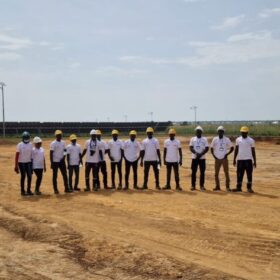
Scatec switches on 30 MW of PV linked to 20MW/19MWh of storage in Cameroon
Scatec has turned on two solar-plus-storage facilities in northern Cameroon, with 30 MW of solar and 20 MW/19 MWh of energy storage.

The Hydrogen Stream: Germany expands global hydrogen alliances
Germany advanced its hydrogen ambitions this week with a fresh call for the International Green Hydrogen Promotion Program in Latin America, a collaborative deal with the UK government, and a tie-up between DHL and Sasol for sustainable aviation fuels based on green hydrogen (eSAF).
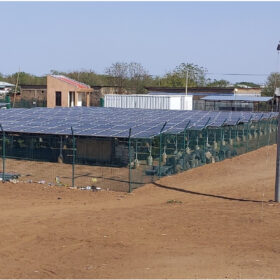
Assessing non-linear tradeoffs in photovoltaic mini-grids
Researchers in Sweden investigated the complex non-linear tradeoffs between capacity expansion costs and reliability levels of off-grid PV mini-grids and found that capacity expansion based solely on cost-minimization may result in several reliability issues.
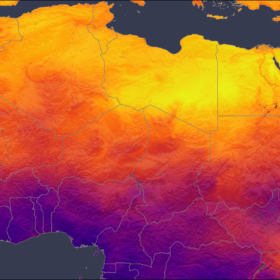
Seasonal solar patterns present opportunity in North Africa
In a new weekly update for pv magazine, Solcast, a DNV company, explains that the climatology of Africa leads to very different seasonal generation patterns from what European solar producers experience. Data analysed by Solcast, via the Solcast API, shows this seasonal variance from summer to winter in 2023.
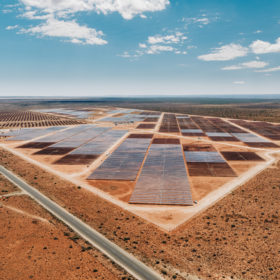
South Africa streamlines 203 MW of wind-solar-storage hybrid projects
The South African authorities awarded project agreements to two wind-solar-storage hybrid projects that were selected in a 2 GW tech-neutral tender held under the Risk Mitigation Independent Power Producers Procurement Programme (RMIPPPP) in 2021.
