Business models for Swedish solar
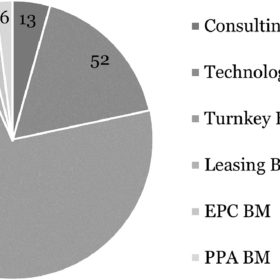
Swedish researchers have identified six business models for the country’s solar market and highlighted how companies differ significantly in their approaches from policymakers and scientists. They analyzed data from 241 solar companies.
A simmering cauldron of renewables ‘revenue cannibalization’
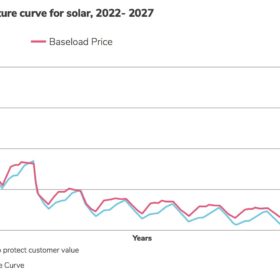
There is enormous demand for renewables to enter the grid, and for power purchase agreements to make use of them. However, as more renewables feed into the grid at intermittent periods, the risk of “revenue cannibalization” increases. Swiss consultancy Pexapark’s latest report looks at the “cannibalization effect” and how the solar PPA market can adapt.
Silver-alloyed CIGS solar cell with transparent indium back contacts, 12% efficiency
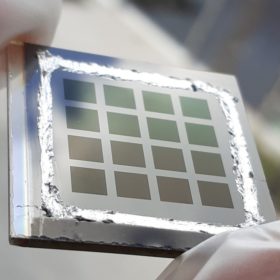
Scientists in Sweden have developed a wide-gap ACIGS solar cell with hydrogen-doped indium oxide (IOH) transparent back contacts and silver alloying to increase the absorber bandgap energy. The device achieved an efficiency of 12.0%, an open-circuit voltage of 835 mV, a short-circuit current of 22.1 mA cm2, and a fill factor of 65.2%.

Molecular thermal energy system can store solar energy for 18 years
Developed by a Chinese-Swedish research group, the device is an ultra-thin chip that could be integrated into electronics such as headphones, smartwatches and telephones. It combines a Molecular Solar Thermal Energy Storage System (MOST) with a micro-fabricated system that includes a thermoelectric generator (TEG) with a low-dimensional material-based microelectromechanical system (MEMS).

Photovoltaics for electric cooling
According to new research from Sweden, solar PV might be cost-competitive in powering electric cooling for an investment cost ranging from $165/kW to $480/kW in hot-climate countries such as Brazil, Spain, India and China, among others. The study focused on the cooling demand for the residential sector, where most of it is expected to originate.
The Hydrogen Stream: Heavy-duty hydrogen refueling station in Germany
Everfuel has signed a deal to build a hydrogen refueling station in Germany, while the European Hydrogen Backbone initiative has accelerated its own program to produce 20.6 million tons of renewable, low-carbon European hydrogen. Separately, the UK government published its hydrogen investor roadmap to 2030.
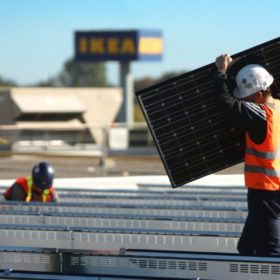
Ikea invests €340 million in solar
Ikea’s holding company, INGKA Holding, will invest €340 million ($371 million) to acquire nine PV systems from Enerparc. In the future, Ikea said it will work with Svea Solar to sell residential PV systems.
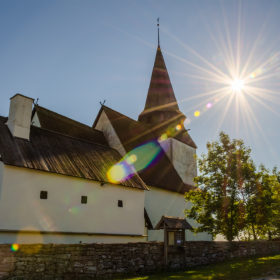
Sweden deployed 500MW of solar in 2021
Sweden’s cumulative installed PV capacity hit 1.59 GW at the end of December.
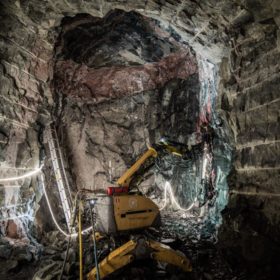
Sweden’s first rock cavern for green hydrogen storage takes shape
Vattenfall, SSAB and LKAB have reached the halfway point in the construction of a rock cavern storage facility in a coastal city in northern Sweden. The 100-cubic-meter facility is being constructed 30 meters below ground and will begin storing green hydrogen next year.

Snow, ice-repellent coating for solar panels
Researchers in Sweden are currently testing three kinds of coatings — hydrophobic, superhydrophobic and slippery liquid-infused porous surfaces. The goal of the new technology is to halve ice adhesion compared to standard modular glass and ensure 96% light transmittance.
