
How to delaminate end-of-life solar modules with ultrasonic cavitation
A German-Turkish research team has developed a solvent-free method using ultrasonic cavitation to delaminate end-of-life crystalline-silicon PV modules, fully separating the glass and front EVA layer while partially releasing c-Si fragments. The proposed approach achieved an 82.2% mass-based delamination efficiency, highlighting ultrasonic cavitation as a sustainable alternative for PV module recycling.
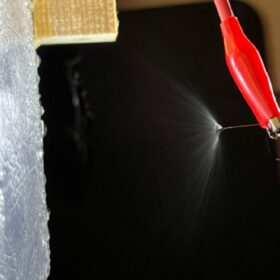
Electrospray cooling can boost PV panel performance with minimal water use
Researchers in Turkey optimized electrospray cooling for PV panels, achieving optimal power output with minimal water use and a compact, energy-efficient setup. Their study identified irradiance, flow rate, voltage, and nozzle distance as ideal parameters.

Türkiye’s solar capacity surpasses 25 GW
Alparslan Bayraktar, Türkiye’s Minister of Energy and Natural Resources, says 2026 will be a record year for renewables in the country after total deployed solar reached 25,827 MW by the end of January.
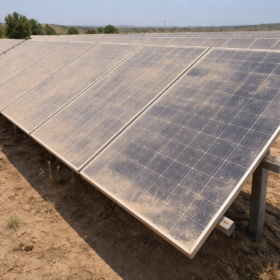
Oleic acid anti‑soiling coating for solar modules
Researchers in Türkiye have developed a passive anti-soiling coating for PV panels using oleic acid–modified aluminum oxide nanoparticles applied via spray coating. Laboratory and field tests showed the coating reduced dust accumulation and initially boosted daily energy output, though performance declined under prolonged environmental stressors.
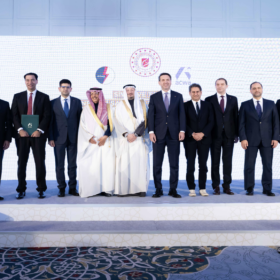
ACWA Power to build 2 GW of solar in Türkiye
Saudi Arabian energy giant ACWA Power will build two 1 GW solar power plants in Türkiye as part of a wider investment agreement covering 5 GW of new renewables capacity in the country.
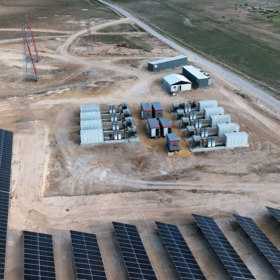
Turkey switches on first major solar-plus-storage project
Oze Grup’s Sivrihisar project pairs a 49.2 MW solar plant with 34.1 MWh of battery storage, marking Turkey’s first grid-connected hybrid facility approved under the sustainable finance framework (DGES).
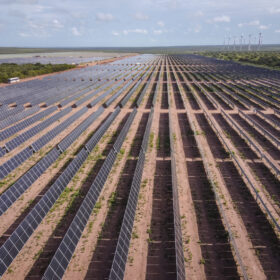
Capex-driven strategies can reduce solar LCOE by 20%
An international research group has conducted a literature review of capital expenditure-driven levelized cost of electricity optimization strategies for utility-scale PV systems. Tracking optimization, system voltage escalation, and advanced system design are identified as the most promising cost reduction areas. “The next wave of PV research must be LCOE-native, system-level, and deployment-validated,” a member of the research group said.

Türkiye installs 4.7 GW of solar in 2025
Türkiye’s cumulative solar capacity is approaching 25 GW after another strong year for new deployments, led by installations for self-consumption in the commercial and industrial market.

Türkiye publishes rules for floating solar
Türkiye has published a regulatory framework covering the legal basis for developing floating solar plants on reservoirs and dams. The rules establish where floating solar can and cannot be built and how projects can be approved.

Turkey attracts 77 applications in 650 MW solar tender
Turkey’s latest renewable energy tender received 77 applications from 38 different companies across eight available solar projects, including the country’s first floating PV plant. Winners will be announced before the end of the year.
