
Exponential or slow growth?
The Turkish solar market finds itself at a crossroads in 2019, with previous policy settings coming to an end and more questions than answers being raised by recent government efforts. While the YEKA projects to date have delivered little in terms of installations, Muren Guler from Global Energy Ltd believes that ‘Mini YEKA’ could provide just the boost manufacturers, suppliers, and developers are looking for.
Mega projects, mega problems
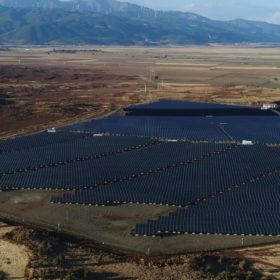
The clouds gathering over Turkey’s 1 GW solar park in Konya, the first YEKA tender, are dominating discussion among the country’s PV players. Developments surrounding the Konya tender illustrate the Turkish solar market’s challenges, as the country’s unsteady economy and its policy preference for local manufacturing appear to be acting as a brake on installations.

What sustainable solar means to Turkey
There is no denying that Turkey is an ideal fit for a major solar market and key player in the PV sector, located on the border between east and west. But while the country has shone as a solar star this decade, writes Eren Engür, Managing Partner at Icarus Energy, it is quickly fading as the government has failed to promote a sustainable solar sector. However, this could be about to change.
The weekend read: Land of the Crescent Sun
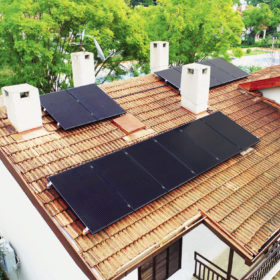
Despite its abundant solar resources, Turkey’s potential for solar energy development remains largely untapped. Although the market grew considerably between 2017 and 2018, the outlook for the next two years, due to the macroeconomic situation and the current regulatory framework, appears rather gloomy. If regulations will not be changed, and tenders for large-scale solar remain unimproved, unsubsidized PV and self-consumption may remain the best options available to seek more growth.
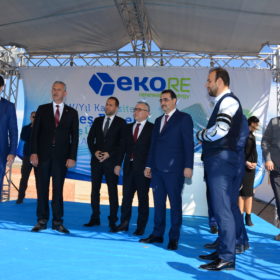
EkoRE breaks ground on 1 GW vertically integrated module factory in Turkey
The facility is in the Bor organized industrial zone of Niğde, in central Anatolia. The factory was backed by incentives provided by the country’s Ministry of Energy and Natural Resources.
European PV market grew 36% to reach 11 GW in 2018
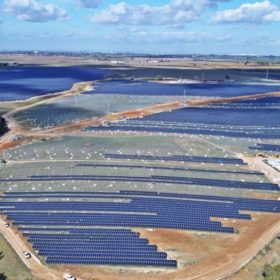
Solarpower Europe has released its estimates for Europe’s installation figures in 2018. A reduction in system prices and a policy push boosted solar across the continent. And if the trade association’s CEO is to be believed, the newfound growth has just begun.

Turkey’s 1 GW Konya project in doubt
Project partners Hanwha Q Cells and local company Kalyon Enerji appear to have ended their partnership and to be negotiating the terms of a ‘divorce’.
Turkey added 2,416 MW of solar capacity in 2018… kind of
Turkey appears to have installed a staggering 2,416 MW of new PV capacity in 2018, although careful study of the data may curb any excitement and solar’s role in the Turkish electricity mix remains negligible, with coal still dominant.
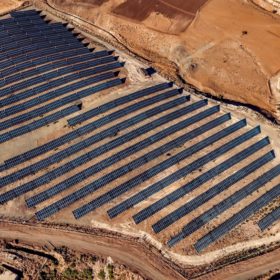
Turkey scraps 1 GW solar tender
The procurement exercise, intended for the deployment of large-scale projects across three locations, was to have been held on January 29. The tender will be re-issued this year – and it may include storage.
Turkey hits 5 GW of registered PV capacity
A total of 1.58 GW of new PV systems have been registered with Turkey’s grid administrator in 2018. Of this new capacity, 1.51 GW is in the unlicensed project segment, for arrays up to 1 MW in capacity, while the remaining 63 MW is for larger projects that had been successful in bidding for PEKA auctions.
