
Floating ‘artificial leaf’ for solar-to-hydrogen production
University of Cambridge scientists have developed lightweight floating photocatalyst devices that produce green hydrogen and syngas. The leaf-like photoelectrochemical devices show potential for scalability.
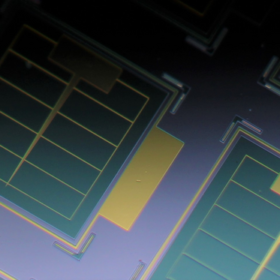
Ultra-thin, radiation-resistant solar cells for new space applications
UK scientists have developed a solar cell based on a layer of gallium-arsenide just 80 nanometers thick, with similar performance to much thicker devices. It showed excellent resistance to damage from radiation exposure, making it ideal for high-radiation satellite/space applications.
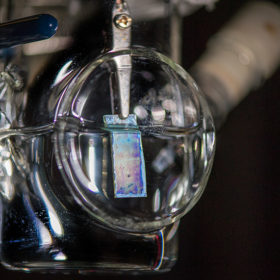
The Hydrogen Stream: Standardized measurements for solar water-splitting
NREL and Berkeley Lab have proposed efficiency and stability best practices for solar water-splitting to make hydrogen, while a team of researchers from Malaysia and Pakistan have revealed their findings on the feasibility of hydrogen-based incineration.
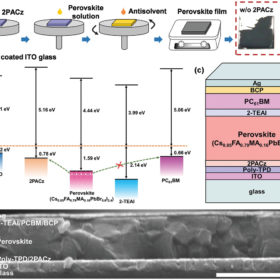
Inverted perovskite solar cell with 21.85% efficiency via surface modulator
A UK research group has used surface modulators to reduce non-radiative recombination in perovskite solar cells. They used 2-TEAI organic halide salt to build a cell with high power conversion efficiency and stability.
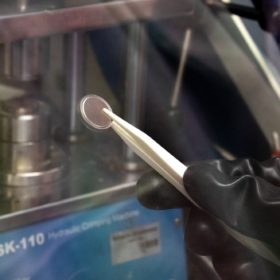
New polymer-based battery electrodes with high stability
UK researchers have developed organic electrode materials to integrate redox-active organic molecules into long-chain polymers. The new electrodes exhibit better cycling performance in lithium-ion batteries, with no apparent capacity decay over more than a thousand charge-discharge cycles.
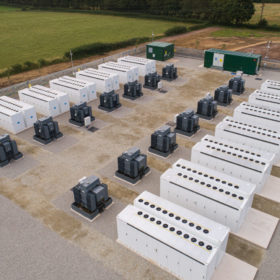
UK battery energy storage acquisitions heating up
About 550 MW of battery energy storage systems (BESS) deals have been signed in the United Kingdom over the past few days. Most recently, Masdar acquired London-based storage developer Arlington Energy.

The Hydrogen Stream: Researchers identify light-triggered coupled oxygen evolution mechanism
Researchers in Singapore have developed a new light-triggered coupled oxygen evolution mechanism that builds on past oxygen evolution research. Oman, meanwhile, has announced a new hydrogen strategy.

Roof-mounted vs. wall-mounted heat pumps
A roof-mounted air source heat pump has reportedly been installed for the first time in the United Kingdom, as part of a pilot project at the University of Salford. The performance of the 200 kg Bosch 3400i Hydrotop will be compared to a similar unit mounted on the wall of a home.

Space-based solar power for terrestrial energy needs
The Cassiopeia solar project aims to use the sunlight collected by a space satellite for terrestrial energy needs. The electricity generated would be converted to radio frequency microwave radiation transmitted to an antenna on Earth. The initial LCOE would be €48 ($47.8)/MWh, according to a UK study.

The Hydrogen Stream: Singapore sees hydrogen supplying up to half of its power needs by 2050
The Southeast Asian country considers hydrogen as a key potential decarbonisation pathway, seeing business opportunities in three related specific fields: finance, shipping and aviation. Meanwhile, Evos, Hydrogenious, and Port of Amsterdam bet on thermal oil benzyl toluene for delivery of hydrogen before 2028.
