
Lowering emissions without breaking the bank in India
A combination of carbon pricing and a renewable portfolio standard for electricity companies in India will be more effective than either measure in isolation to help the nation meet its climate change targets, according to a study by MIT researchers.
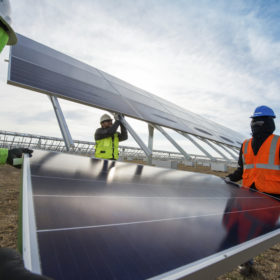
SunPower’s slow climb towards the black
The high efficiency solar panel maker pulled off a rare profit in the second quarter due to selling off leases, but expects to report another quarterly loss in its next update.
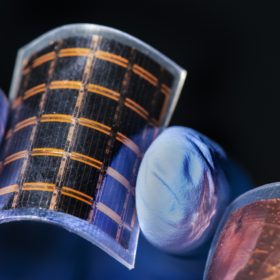
Another step toward affordable III-V solar cells
The U.S. National Renewable Energy Laboratory reports further progress in bringing down the cost of III-V solar cells. Scientists have refined their ‘brand new, 50-year-old’ D-HVPE technology to speed up the production rate for gallium arsenide solar cells by a factor of more than 20. The development is a potential step toward making incredibly efficient solar cells cost effective for everyday purposes.
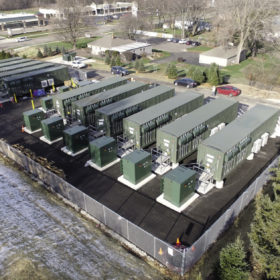
Utility scale, rather than behind-the-meter batteries will drive energy storage take-up – Bloomberg u-turn
The analyst has published its latest Energy Storage Outlook report and says large scale deployment will provide the majority of the 1,095 GW/2,850 GWh of battery storage worldwide in 2040, with prices driven down further by grid services demand and EVs.

Microsoft is on a solar shopping spree
The tech giant has signed a power contract for the output of First Solar’s 150 MWac Sun Streams 2 solar plant, bringing its procurement of solar to almost 500 MW – but none of its PV projects have been completed yet.
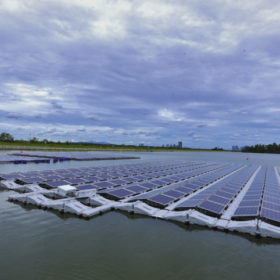
Solar’s 20 most overlooked benefits for global sustainability
As renewable energy development is ramped up to address the climate crisis, negative side-effects should be avoided, especially when technology and resources could maximize the benefits. ‘Techno-ecological’ crossovers could ensure win-win outcomes for solar development and ecosystem and biodiversity conservation.
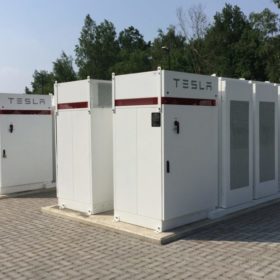
Megapack marks Tesla’s new play for utility scale storage
The Palo Alto company says it has improved its large scale battery offering with the new product in the wake of the success of its Powerpack-driven big battery in Australia. The Megapack can be deployed at a 250 MW/1 GWh clean energy plant four times faster than a fossil fuel alternative, claimed the business in a blogpost.

Harnessing heat for 80% theoretical efficiency
Scientists at Rice University in Texas have developed a device which converts heat into light by squeezing it into a smaller bandgap. The ‘hyperbolic thermal emitter’ could be combined with a PV system to convert energy otherwise wasted as heat – a development the researchers say could drastically increase efficiency.
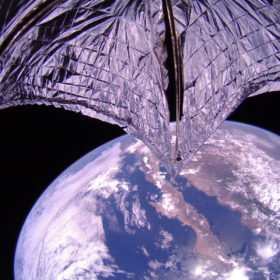
Solar sails into orbit on crowdfunded satellite
A satellite launched from Florida last month has successfully unfurled its ‘solar sail’ in an early test of a new type of sunlight powered propulsion. The Planetary Society aims to demonstrate the technology as a viable way to propel small satellites, greatly lowering the cost of space exploration.
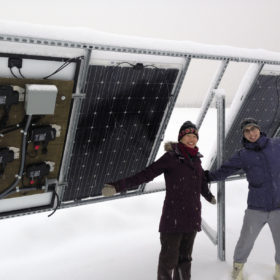
The weekend read: Pursuing a 20% bifacial boost
Research on bifacial solar panel performance has moved performance analysis closer to a standardized practice than ever before. More field tests are underway across the United States, and the first waves of data are expected this year. These tests will help standardize a predictive model for bifacial projects that is bankable.
