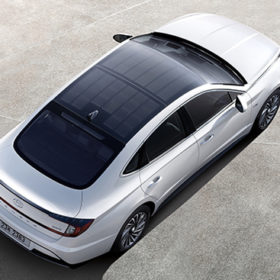
Hyundai enters the solar car race with new Sonata
Hyundai has unveiled its new hybrid, the Hyundai Sonata, complete with integrated solar cells. The Sonata’s unveiling joins Toyota and Lightyear in integrating solar PV with EVs.

Tesla results: solar down, batteries up
Elon Musk’s EV and energy company is becoming increasingly irrelevant in the rooftop solar market, but battery sales are booming.
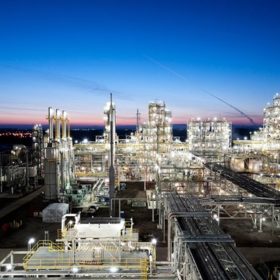
No respite for REC Silicon as shutdown dominates Q2 figures
The Norwegian polysilicon supplier – which has most of its manufacturing operations on U.S. soil – cannot give any estimate on when its solar material production lines will return, and has been left entirely dependent on the semiconductor products made by its Montana facility.

The U.S. Congress is (finally) talking about full decarbonization
Details are sparse, but today the U.S. House of Representatives’ Committee on Energy and Commerce is holding its first hearing towards coming up with a plan to fully decarbonize the U.S. economy by 2050.

Putting China’s electricity market reforms on the spot
A report by the U.S.-based Rocky Mountain Institute has modeled scenarios for the deregulation of electricity markets in China. The report finds the implementation of a spot market would drive increased integration of renewables and provide significant reductions in costs and emissions.
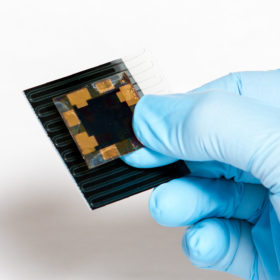
Miasolé hits 20.56% efficiency with flexible CIGS technology
California based Hanergy subsidiary Miasolé has broken its own internal record for thin film cell efficiency, surpassing the 20% mark. The efficiency of 20.56% on a flexible substrate has been confirmed by U.S. National Renewable Energy Laboratory.
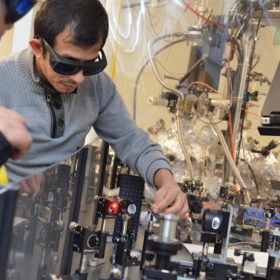
One atom layer to ‘free the electrons’
Scientists from the University of Kansas say adding a layer of two-dimensional semiconductor molybdenum disulfide can greatly improve the performance of organic solar cells. The research could also inform efforts to engineer the interface between layers in hybrid organic cells.
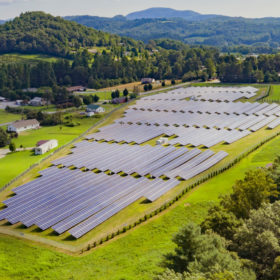
US utilities approve 551 MW of solar power at 3.8¢/kWh
North Carolina-based Duke Energy has completed a solicitation for 551 MW of solar power through its CPRE program, with average pricing between 3.79¢/kWh and 3.83¢/kWh and 20 year power contracts.
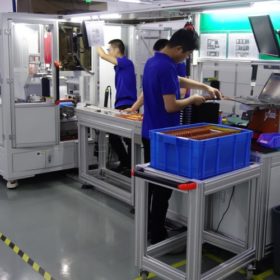
Eliminate hydrogen for better battery performance, scientists say
Scientists at the University of California, Santa Barbara who are working with sodium-ion batteries have found that the unintended presence of hydrogen is to blame for many of the technology’s shortcomings in terms of degradation and performance loss. Keeping hydrogen out of the materials throughout production could allow sodium-ion batteries to achieve performance levels competing with their lithium-ion counterparts.
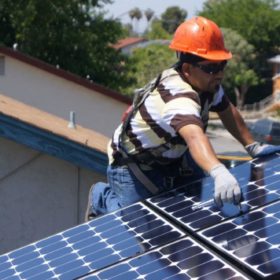
BlackRock goes behind the meter with GE
The startup formerly known as GE Solar has become a full fledged company, with GE and BlackRock announcing the creation of Distributed Solar Development, a behind-the-meter solar joint venture.
