The year in solar, part II: A lively show season, more legal shenanigans and rising panel efficiencies abound
Intersolar Europe is always a key date in the solar calendar but this year’s show had it all, including three panel-smuggling arrests. Elsewhere, wafers were getting bigger, efficiency records were tumbling and new technologies were emerging. There was also more news on the solar car ports fad and Hanwha’s ongoing legal tussle.
REC Silicon hit by call-in of $17m loan related to failed wafer operation
Finnish lender Nordea has called in a NOK150 million indemnity loan thought to have been taken out by REC Silicon ASA as a result of the bankruptcy of its Norwegian wafer manufacturing arm seven years ago.

The year in solar, part I: New modules, flat-pack solar and inverter turbulence
The first part of pv magazine’s review of 2019 considers Q1, when solar early adopter Italy offered an optimistic start to the year by fleshing out its plans for PV but uncertainty still clouded the world’s biggest solar market. The potential for household solar installations to rocket the world over – helped by ever cheaper panels – prompted strategic decisions in the inverter market and analyst expectations were confounded as the cobalt and lithium price plummeted, bringing the EV revolution a big step nearer.
Gauging non-fullerene acceptors for organic PV
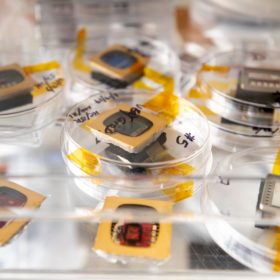
U.S. scientists are trying to understand how non-fullerene small-molecule acceptors (NAFs) increase the efficiency of organic PV devices. They claim that methoxy groups embedded in the acceptors could facilitate an efficiency increase of approximately 6%.

Tesla to hide ‘solar test-house’ under tents at California site
CNBC has uncovered a recently granted building permit that allows Tesla to put up “two canopy covers” over its new “solar test houses.” Earlier this year, Tesla CEO Elon Musk announced that 2019 was “the year of the solar roof.”
New thermodynamic formula to calculate bifacial gains
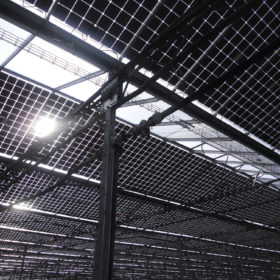
An American research team developed the new formula by applying to bifacial cells the Shockley-Queisser triangle, which is used to calculate the maximum theoretical efficiency of a monofacial solar cell using a single p-n junction technology. According to the group’s findings, the triangle can help to clarify the deeper physical principles of the bifacial technology.
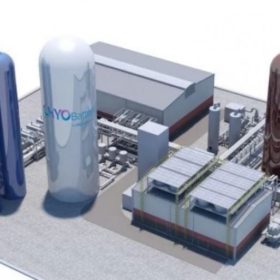
Highview Power plans 50 MW/400 MWh-plus cryo energy storage plant in Vermont
The British company, which has tested its liquid air energy storage technology in the U.K., says it is preparing to deploy its first plant on U.S. soil. Highview claims its CRYOBattery is half the price of utility scale lithium-ion storage.
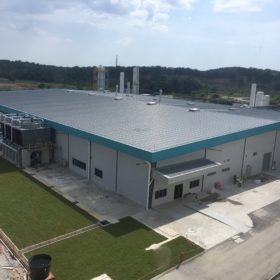
1366 Technologies adds $18m in pursuit of cheaper silicon solar cells
The company’s technology falls into the ‘kerfless’ wafer category: Instead of sawing silicon ingots into wafers, a time-consuming and wasteful process, 1366’s approach forms wafers directly, using molten silicon.
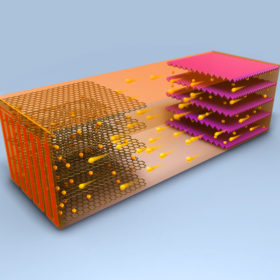
Charging an electric vehicle in 10 minutes
Scientists from Penn State University have developed a self-heating battery for electric vehicles which is said charge in only 10 minutes at 60 degrees Celsius.
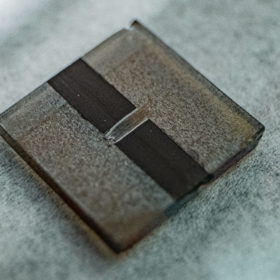
AI selecting best solar perovskites
A U.S. research team has used machine learning to optimize material composition and predict the design strategies and performance of perovskite solar cells. The researchers analyzed 2,000 peer-reviewed perovskite publications and collected more than 300 data points.
