
Green New Deal secures support from its first national-level US labor union
The ambitious climate, jobs and social program has encountered strong resistance from some national unions, and not only those connected to professions linked to traditional power industries.
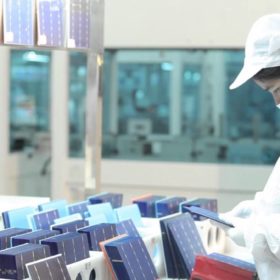
Jinko and REC petition for review of Hanwha patent concerned in US lawsuit
In the petition, the manufacturers claim their Korean rival’s patent assertions should be declared invalid as there is evidence the innovations they refer to were either not new or were obvious steps forward.
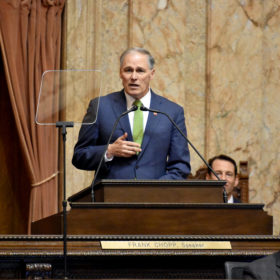
US Democratic Party bars climate change debate
The campaign of Democratic presidential contender Jay Inslee says the Democratic Party has also told the governor of Washington state if he participates in anyone else’s climate change debate he will be barred from future hustings.
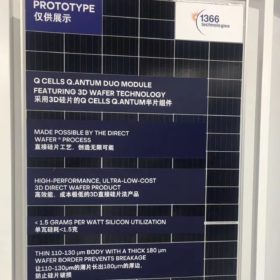
Prototype modules featuring ‘3D wafers’ on show at SNEC
New modules incorporating American company 1366 Technologies’ 3D direct wafers were unveiled yesterday at the SNEC trade show in Shanghai. The prototype modules are produced by Korean manufacturer Hanwha Q Cells. The two companies have a strategic partnership going back several years, and are ramping up a wafer factory near Q Cells’ module facilities in Malaysia.
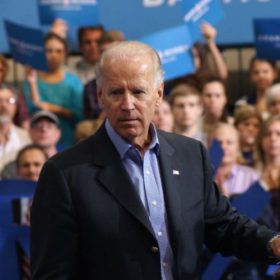
Biden promises 100% clean energy in US by 2050
U.S. Presidential candidate Joe Biden has released his climate plan, which focuses on tax cut reversals and executive action to kickstart 100% clean energy and net-zero carbon emissions by 2050.
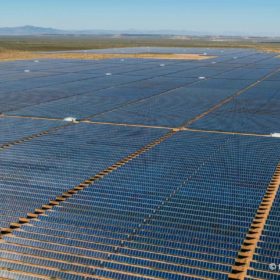
Anheuser-Busch buys big solar in US
The brewer of such fine beverages as Busch Light has signed a power contract with Recurrent Energy for the electricity generated by the 222 MWac Maplewood solar project in Texas. The deal will positions the brewer to reach its sustainability goals four years sooner than anticipated.

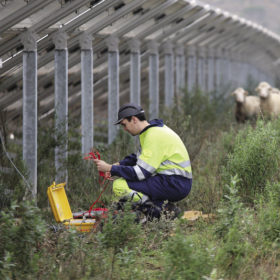
Solar, EVs and energy storage among the few technologies keeping pace with energy transition goals
Among 45 critical energy technologies and sectors assessed in a tracking report by the International Energy Agency, only seven are keeping hopes alive that climate, energy access and air pollution goals can be met.

Canadian Solar suffers $129m reversal in quarterly fortunes
With figures at the end of last year boosted by profitable PV project sales, the manufacturer and developer is now nursing unflattering comparisons and aims to get more projects built and sold by the end of next month.

IEA urges advanced economies to support nuclear as renewables cost continues to fall
An International Energy Agency report estimates the share of nuclear power in advanced economies could fall by two-thirds by 2040, as aging plants retire. The report claims without support for nuclear, the transition to a low carbon energy system would be far more complex and threaten global emissions targets.
