Hanwha continues tidy up of solar business with Nasdaq delisting
Hanwha Q Cells’ New York-listed business unit will come back under the company umbrella early next year, with a separate merger between two further units of the Korean conglomerate set to consolidate its solar expertise in house.
Washington DC 100% renewables bill could supercharge solar
A bill is moving through the DC council to set a more aggressive renewable energy target than any state has yet approved, and to shift the city to solar.
Renewables make up more than 20% of generation in 10 US states, with more on the way
Recent analysis from the Department of Energy shows the Midwest and Plains States lead, but the coasts are on track to catch up thanks to mandates.
American scientists give PV a paint job
Berkeley researchers have discovered a shade of blue – dating back to ancient Egypt – which has impressive qualities they say could reduce building energy consumption and boost solar energy output. Meanwhile, the US National Renewable Energy Laboratory has developed a perovskite cell material that could be applied to a substrate using a paintbrush.

Innolith launches non-flammable battery with 50,000 charging cycles
Inorganic electrolytes will do the trick the company says. For multi-MW grid-scale applications the company says its technology can boost battery life to 50,000 cycles and is non-flammable. It adds that the costs of the product are competitive with conventional battery systems. Innolith is taking over the baton from Alevo, including chief executive and engineers. Alevo, however, went bankrupt last year, making the same promises.
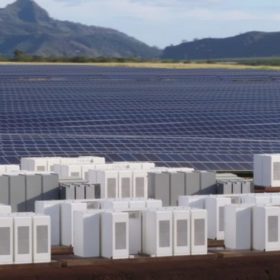
Hawaii’s march to 100% adds 260 MW solar + 1 GWh storage
The Hawaiian Electric Companies are in negotiations with developers to build seven solar projects across three islands.
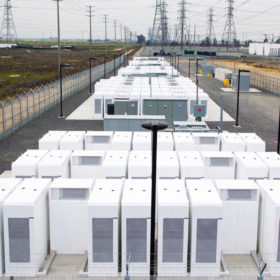
Nevada, US primed for up to a gigawatt of energy storage
A report by the Brattle Group for Nevada regulators suggests that by 2030 – depending on pricing – 700 to 1,000 MW / 2.8 to 4 GWh worth of energy storage could be cost-effectively deployed statewide.
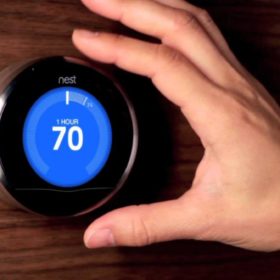
Your appliances can save the grid (and allow more solar)
A new report by Wood Mackenzie finds a surprising amount of potential demand flexibility in U.S. homes, which can make the job of integrating more solar and wind easier.
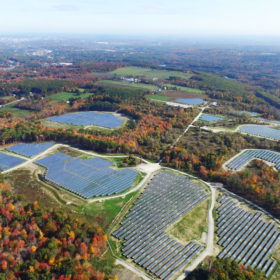
Who’s afraid of Virginia solar power?
The Commonwealth’s 2018 Energy Plan includes 5 GW of utility scale wind+solar, plus 500 MW of rooftop solar power, less than 1 MW in size, over the next decade.
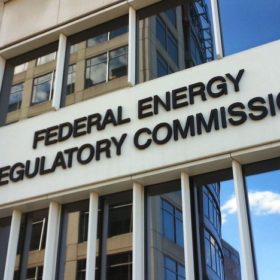
Trump names pro-fossil ideologue to fill vacant FERC seat
Bernard McNamee has gone so far as to write an Earth Day op-ed on the benefits of fossil fuels. Coal bailout, here we come.
