
2018: India second largest solar market on back of 113 GW global installations
With 11 GW, India is set to become the second largest solar PV market in 2018, usurping the U.S., as global demand reaches 113 GW, says IHS Markit. It adds that Q4 will be the biggest quarter in history for installations, with 34 GW expected.

Credit Suisse to launch €500 million green bond issue to back US solar projects
The Swiss bank will utilize the proceeds to refinance construction and operation of U.S. solar projects, and this could be the first of several issuances.

Batteries, inverters, solar cells safe from US Section 301 tariffs
The list of Chinese products that the Trump Administration is considering for duties under Section 301 spares inverters, solar cells and modules, and the lithium-ion batteries used in EVs and battery storage to accompany PV.

Shell envisions central role for solar in new report
Shell’s new report shows a world where solar meets the largest portion of primary energy demand as soon as 2050.
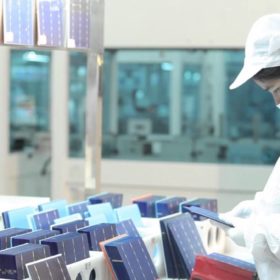
NextEra reveals 2.75 GW solar module deal with JinkoSolar
The U.S.-based power giant has announced that it is the mysterious counterparty that will be supporting JinkoSolar’s foray into U.S. manufacturing, and Jinko has revealed that its Florida factory will have a 400 MW annual capacity.

JA Solar issues strong response to IP theft allegations
Chinese module manufacturer, JA Solar has issued a statement refuting assertions made by SolarWorld in hearings conducted last year, which were reported last week in the findings of United States Trade Representative (USTR) report into Chinese practices related to intellectual property.
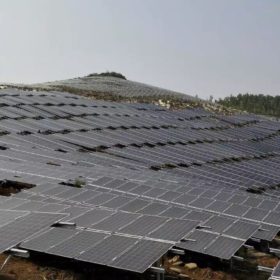
Q&A: US SolarMax talks China strategies, the residential market and O&M
SolarMax Technology CEO, David Hsu talks to pv magazine about the experiences of an American company operating in the Chinese solar market, including knowledge transfer from the U.S., in particular in the field of O&M, residential opportunities and storage.

US flow battery maker ViZn Energy closes shop
ViZn has laid off all of its employees and ceased operations, as the latest in a series of closures and bankruptcies for makers of alternative battery technologies.

Microsoft signs 315 MW of solar power contracts in Virginia, US
The company is billing the contract with a portion of a 500 MW project as the largest corporate solar power purchase agreement (PPA) to date.

No deal: US rejects EU’s WTO request for softer tariffs on solar
Joint communication between the European Union and the U.S. reveals that Washington has not agreed with suggestions from Brussels that EU solar imports were not causing any serious injury and thus should be subjected to a less penalizing tariff.
