Minnesota’s solar market is growing fast (with chart)
Minnesota installed 203 MW-DC of solar during the first quarter, adding to 207 MW deployed in 2016. The state is expecting to reach more than 800 MW of installed capacity by the end of this year.
Tesla scales down solar deployment in Q1, readies Solar Roof
The first full quarter since Tesla’s acquisition of SolarCity shows a 30% fall in watts of solar deployed, as the company focuses on preparations for the roll-out of its Solar Roof and Model 3 electric vehicle, including expanded battery production.
U.S. utilities try new tactics to discourage solar, but still aren’t getting what they want
The latest NCCETC report on state solar policies finds some new twists as part of an ongoing attempt by utilities to weaken the economics of customer-owned solar, but regulators still mostly aren’t on board.
U.S. power company NRG continues moving into solar during Q1
Despite a challenging financial environment, NRG continues its solar expansion, including an increasing presence in community solar.
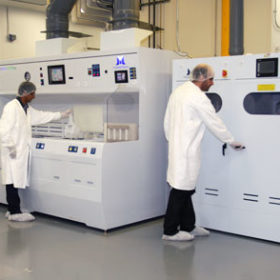
Natcore achieves 20.7% efficiency on silver-free back contact cell
The latest efficiency milestone for Natcore’s Foil Cell is verified by the NanoPower Research Lab at Rochester Institute for Technology. The result was achieved on the Natcore Foil Cell, which utilizes a lasering process and novel metallization strategy, eliminating the need for costly silver.

Dutch pension fund PGGM invests €200 million in SolarCity’s project portfolio
The Dutch fund will invest in a portfolio of solar projects of Tesla’s solar unit. The projects are spread across 21 U.S states and have a combined capacity of 275 MW.

Masdar & MIT develop method for high efficiency semiconductor materials
Researchers from the Abu Dhabi based Masdar Institute and the renowned Massachusetts Institute of Technology have jointly published the development of a fabrication method, which they say could make high efficiency semiconductor materials such as gallium-arsenide, indium phosphide and others more competitive with crystalline silicon.
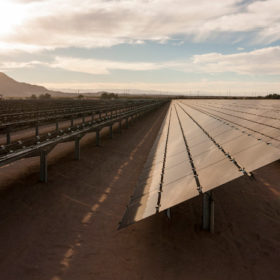
First Solar reports strong Q1 results as it readies for Series 6
First Solar brought in a net profit on the sale of a major solar project, as it orders tools and prepares for the switch to its large-format series 6.
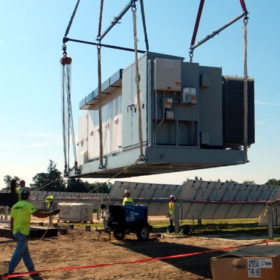
Dominion to add 990 MW of solar PV in the United States over the next five years
The U.S. utility sites the falling cost of utility-scale solar for the expanded role, and the large majority of solar plants will be located in North Carolina.
BREAKING: Suniva petition could start new global solar trade war
Today Suniva filed for relief under a little-known act that could exempt the United States from global trade agreements and allow President Trump to take trade action against solar imports from multiple nations. Suniva is asking for a minimum import price of US$0.78 per watt for modules and $0.40 for cells.
