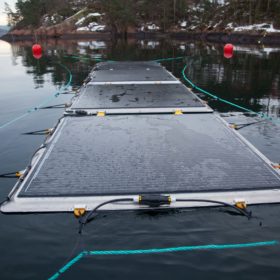
New floating PV system for near-shore applications
Norwegian startup Sunlit Sea has designed a floating array consisting of a single unit float built-in cold-pressed aluminum with a close-to-standard solar panel bonded on the top surface. A 22.7%-efficienct mono PERC photovoltaic panel is bonded to the top of the float, giving a total unit thickness of 85 mm.
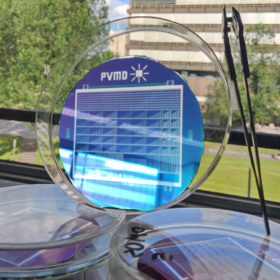
Solar cells integrating power electronics
Researchers in the Netherlands investigated the potential for integrating power electronics in solar cells in the form of diodes, transistors, capacitors, and inductors. They believe that this kind of PV cell may initially find applications in PV-powered Internet-of-Things (IoT) devices and later, as the economy of scale kicks in, in large-scale applications.

Germany deployed 548 MW of PV in May
The cumulative capacity of all subsidized PV systems in Germany hit 59.3 GW at the end of May.

Agrivoltaics for hop growth
France’s Q Energy has developed a new way to combine solar generation and the cultivation of hops, which can grow up to 8 meters in height. The agrivoltaic system consists of two mounting units with 52 bifacial PV modules.
The Hydrogen Stream: Romania calls for green hydrogen projects
Romania has unveiled a state aid scheme to support investments in the production of hydrogen powered by solar, hydro and wind, while Air Products and Gunvor have agreed to build a hydrogen import terminal in Rotterdam.
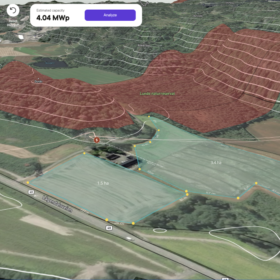
New software to identify solar-suitable surfaces
Norway’s Glint Solar has developed cloud-based software that finds suitable surfaces for solar parks. It analyzes factors such as the distance to the grid or substations, topography, soil depth, and solar radiation. The tool can also be used for preliminary project sizing.
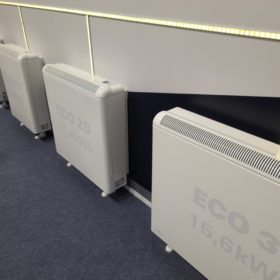
Solar-powered residential heating system based on storage heaters
Spanish heating specialist Elnur Gabarron offers a residential heating system that works with surplus solar power and storage heaters. The system can work as a backup solution, combined with existing conventional heating, or as a household’s main heating system, with minimal use of grid electricity.

Storing solar power via borehole thermal energy storage
A Chinese-Finnish research group has proposed the use of seasonal, soil-based thermal energy storage in combination with photovoltaics in residential districts. They have found that the hybrid concept could cover up to 58% of total heating demand.
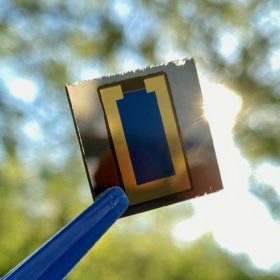
Perovskite-CIS tandem solar cell with 24.9% efficiency
A Dutch-German research team has developed a new PV cell with a certified efficiency of 23.5%, an open-circuit voltage of 1.59 V, a short-circuit current of 19.4 mA cm–2, and a fill factor of 75.5%. It reached maximum efficiency of up to 24.9%, due to the high quality of the subcells.

Netherlands to build 10 GW national network for green hydrogen
The Netherlands is planning a €1.5 billion ($1.6 billion) green hydrogen network that will consist of 85% recycled natural gas pipes. It is expected to go online in 2027.
