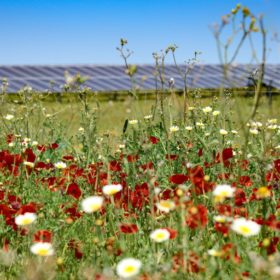
Baywa re wraps up major virtual PPA with Finnish packaging giant
The German clean power company and Huhtamaki have signed a 10-year deal that will ensure the construction of two solar farms in southern Spain with an aggregate generation capacity of around 135 MWp.
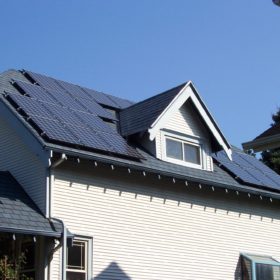
High energy prices mean big gains for smart-metered Belgian PV system owners
In the Belgian macro-region of Flanders, residential PV system owners that decided to install smart meters and abandon net metering are currently seeing their injection tariffs being paid at €0.11, up from just €0.03 in January. This gain adds to the high value of the kilowatt-hours they self-consume and it is helping them halve the payback time of their installations.
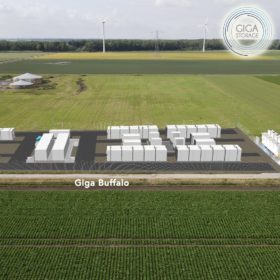
Wartsila to supply Netherlands’ largest battery
The 25MW/48MWh battery will be the country’s largest energy storage system to date. The project is touted as the first large-scale battery project based on lithium iron phosphate (LFP) chemistry in Europe.

Norwegian investor raises stake in company developing ‘perovskite-boosted’ solar cells
Swedish business Evolar is working on a bolt-on piece of production equipment which would upgrade the cell lines of conventional manufacturers with a perovskite lift in performance.
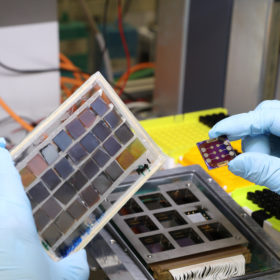
Perovskite solar cell retains 99% of initial efficiency after 1,450 hours
Developed by German researchers, the 20.9%-efficient device was built with an architecture avoiding the use of the ionic dopants or metal oxide nanoparticles that are commonly used to contact the cell, as these can be subject to secondary reactions at higher temperatures.
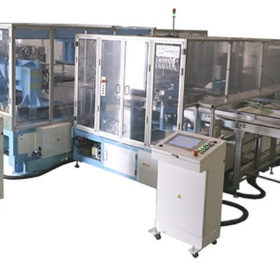
Solar module disassembly equipment from Japan
Developed by Japanese PV equipment provider NPC Incorporated, the solar module disassembly line is claimed to enable the reuse of frames, junction boxes, intact broken glass, solar cells and EVA sheets.
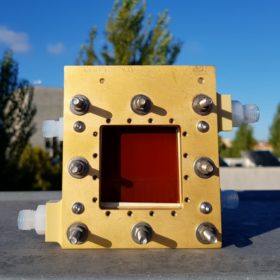
Solar redox flow cell for residential energy storage
The device was designed by scientists in Portugal to optimize light absorption by the semiconductor and ensure an effective diffusion of redox species while offering minimal electronic and ionic transport resistance. The cell has a 25cm2 photoactive area and relies on ferrocyanide/anthraquinone redox flow chemistry and a nanostructured hematite photoelectrode.

Low-bandgap GaInNAsSb solar cell for multi-junction architectures
Developed by researchers in Finland, the solar cell is intended to be used as part of lattice-matched multi-junction solar cells. It achieved a short-circuit current density of 15.2 mA/cm2 and external quantum efficiency of 0.79.
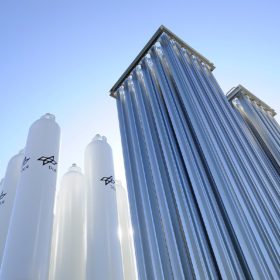
PV-powered hydrogen could already hit LCOH of €6.23/kg in Germany
Green hydrogen can now compete with hydrogen produced with fossil fuels in Germany, according to new research. Scientists have looked at six different scenarios for alkaline and PEM electrolyzers and identified alkaline devices powered by grid-connected PV as the cheapest option.

Fimer, Enie to set up inverter factory in Algeria
The Italian inverter maker and the Algerian electronics manufacturer are joining forces to produce solar inverters in Algeria. The location of the planned manufacturing facility was not disclosed.
