New Italian PV industry body struggles to unleash utility scale PV
As the ongoing changes in Italian politics inevitably create some uncertainties, PV operators continue to organize themselves, pulling together to put forward their agenda. pv magazine spoke with Andrea Cristini, spokesperson of new industry body Alleanza per il fotovoltaico in Italia, a group of 25 operators which in December joined forces to promote utility scale solar parks.
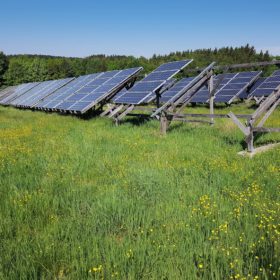
Agrivoltaics have an average LCOE of €0.093 per kWh in Germany
According to new guidelines by Germany’s Fraunhofer ISE, agrivoltaic projects are already competitive with other renewable energy sources today. The lack of a proper regulatory framework, however, is currently preventing the dual use of arable land for food production and power generation from becoming a mainstream solution.
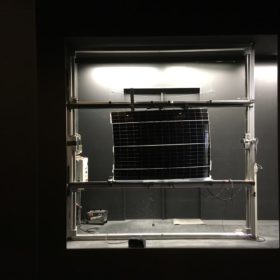
Vehicle-integrated PV reduces EV charging time in sunny regions by 40%
Dutch scientist Bonna Newmann spoke with pv magazine about the present and future of vehicle-integrated PV from a technological and economic perspective. Solar panels installed on cars could have a payback time of only three or four years and ensure 10,000 km of pure PV-generated road travel per year, she said. Furthermore, if you live in a sunny place, you can drive an electric car with solar panels for weeks during summertime, without the need for recharging, she pointed out.
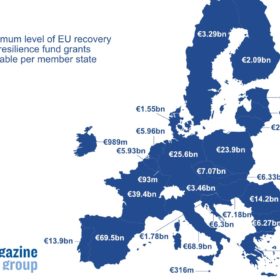
Austrian solar industry wants Covid-recovery funds spent on renewables-friendly grid
The national PV body in the country wants €1 billion from the EU’s recovery and resilience fund to be allocated to upgrading the electricity network to host more solar power generation capacity.

Work begins on underground hydrogen storage project in Germany
German energy provider EWE wants to set up a test cavern with a capacity of 500 cubic meters at a depth of 1,000 meters. It is scheduled to go into operation in spring 2022.
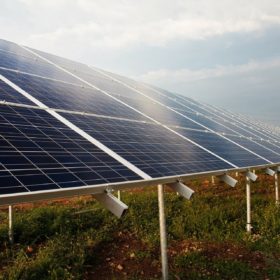
France allocates 451.9 MW in ninth tender for large scale PV
In the category for PV projects exceeding 5 MW, the final average price was €0.05338/kWh. The tender’s overall final average price, including smaller PV project categories, was 4.7% higher than in the previous procurement exercise.
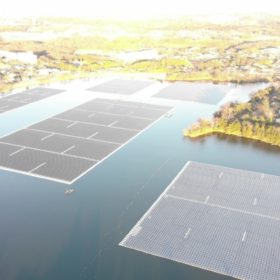
Japan’s largest floating PV plant being reconstructed after Typhoon impact
French floating PV specialist Ciel&Terre said the plant is being split into smaller islands, with a square shape, to avoid stress concentration.
The best materials for carrier multiplication in solar cells
Researchers in the Netherlands have sought to identify all those semiconductor materials that may make the application of carrier multiplication in photovoltaics much more than a mere suggestion. According to them, the bandgap of the materials should be between 0.6–1.0 electronvolt (eV), which would result in maximum theoretical efficiency of around 44%. 2D and bulk materials were indicated as the most promising with near-ideal carrier multiplication.

France launches 700 MW tender for large-scale PV
Solar project developers in France will have until June 25, 2021, to submit their bids. Under new rules, the selected PV projects must use modules manufactured with a low carbon footprint.
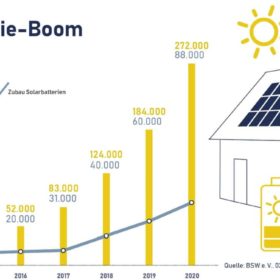
Germany has 270,000 residential batteries linked to PV
Around 88,000 energy storage systems linked to rooftop PV were installed last year in the country, which supports residential batteries through a dedicated scheme.
