UK water utility launches solar tender
Southern Waters is considering buying electricity from generation facilities on its sites in southern England. After launching a request for information process last year, it is now seeking bids from independent power producers.
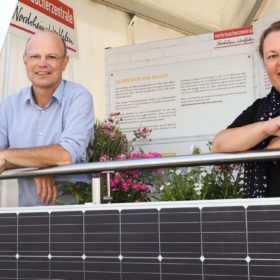
Germany’s untapped potential for balcony PV panels
In the German state of North Rhine-Westphalia, a balcony module, with an upfront investment of €350 to €500, can provide electricity with a current value of €54 per year. The payback period ranges from six to nine years.
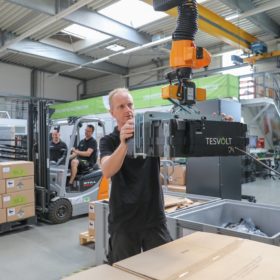
Battery manufacturing capacity set to increase fourfold to 1.3 TWh by 2030
Analysts at Wood Mackenzie have looked at plans for the incoming decade and concluded that about 119 manufacturing sites will be up and running by 2030. China currently sits firmly in the driving seat, with Asia Pacific comprising 80% of global manufacturing capacity, but Europe is catching up.
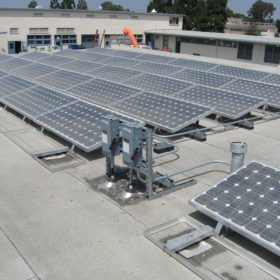
Photo-electrochemical cells vs. PV electrolysis
Dutch researchers have analyzed the two most promising solar-assisted technologies to produce green hydrogen, based on the levelized cost of hydrogen. They found that PV-powered hydrogen production offers the lowest costs, at $6.22/kg, with a solar-to-hydrogen efficiency ratio of 10.9%.
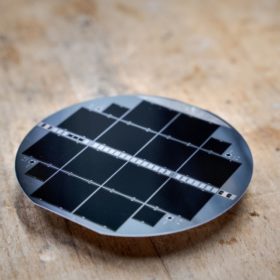
Fraunhofer ISE claims 25.9% efficiency for III-V tandem solar cell
The new results mark an improvement on the institute’s previous 24.3% efficiency record. The III-V tandem solar cell is directly grown on silicon.
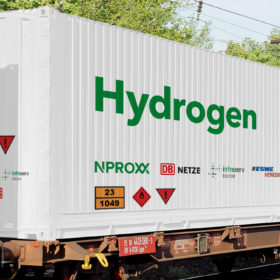
Hydrogen can be transported by rail, German railway company says
A study by DB Energie shows that technically and legally there is nothing to be said against the transport of hydrogen by rail. However, there is still a lack of suitable transport containers.
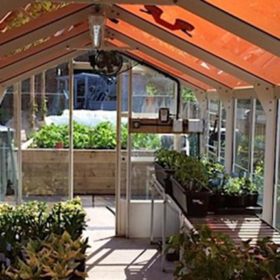
Thin-film amorphous silicon greenhouses begin to sprout
Researchers have matched the tinting of semi-transparent PV modules with the bandwidth of light that plants absorb for photosynthesis. A promising trial with basil and spinach has opened up economic opportunities for farmers.

France’s EnerGaïa, Italy’s Key Energy to be held in fall, Australia’s All-Energy 2020 canceled
France’s EnerGaïa Forum will be held Dec. 9-10 in Montpellier, while Italy’s Key Energy event will be held in Rimini from Nov. 3-6. Australia’s top PV industry event will not take place in 2020.
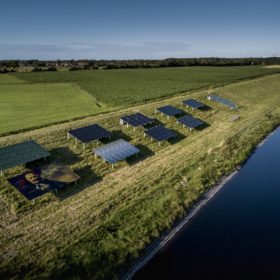
Challenging plans to deploy PV on dikes
Dutch researchers are trying to determine whether large-scale PV projects can be deployed on flood-control dikes across the Netherlands. A 5 MW solar project has already been built on a dike near Groningen, but the researchers believe there is potential to build up to 2.9 GW of PV on such embankments.

The PV world ten years ago – summer series part II
pv magazine editor Pilar Sánchez Molina recalls news from the PV sector of ten years ago as part of a new series. The insights offered will not only bring back memories for the pioneers of that exciting, challenging period but may also offer an idea of where we could be in 2030.
