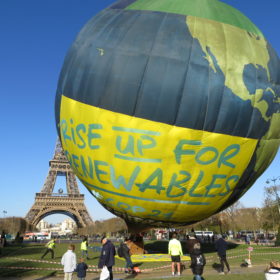
France: EDF, Total and Engie ‘really bad’ green providers, says Greenpeace
Greenpeace France has launched a Green Electricity Guide, which ranks 19 French electricity providers in terms of their renewable energy offers. The environmental association accuses several providers of practicing greenwashing, as they buy power from nuclear power plants and then turn it “green” using guarantee of origin certificates.
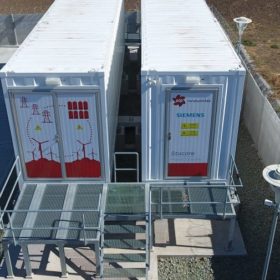
EDP invests in off-grid solar, storage
The Portuguese utility expands its renewable energy business – traditionally dominated by wind – with a new storage station in Romania and the acquisition of a start-up, which offers off-grid home solar solutions in Bangladesh.

Leclanché: Revenues doubled, EBITDA in the red
While revenues have doubled year on year, Leclanché says its EBITDA is suffering from high operational expenses and one-off payments. However, the goal to post a positive EBITDA by 2020 is on track, it adds.
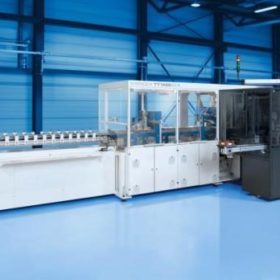
Teamtechnik receives stringer order from Russia’s Hevel
For the production of its heterojunction modules, the Russian manufacturer will cooperate with the German PV engineering provider for the supply of stringers and adhesive technology. To this end, Hevel has ordered new stringer systems and layup from Teamtechnik.
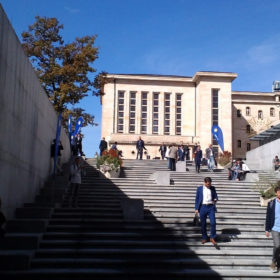
Becquerel winners submit resolution for revival of solar industry to the EU
At the EU PVSEC in Brussels this week, prominent representatives of the solar industry joined an appeal to rebuild a major European PV production line along the entire value chain. They called on the EU Commission and member states to introduce eco-labels and recycling criteria for solar modules, to stimulate PV expansion and align research policy with the revival of the solar industry.
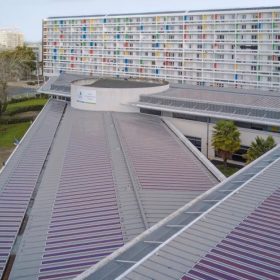
France assigns 230 MW in rooftop solar tender
Final prices were 5% lower than in the previous tender of the same kind. Around 40% of the selected projects were submitted by agricultural enterprises.
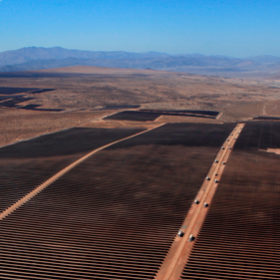
Acciona presents ‘world’s first’ blockchain renewable energy certification platform
The technology is said to use blockchain’s properties of providing secure real-time and fully transparent data. The company says that ensuring renewable energy certificates is becoming increasingly important. This is the first step towards a more comprehensive platform that seeks to cover renewable energy assets from other energy companies as well.
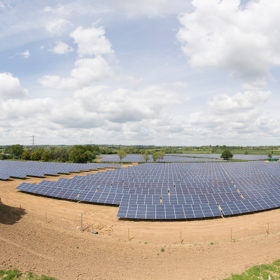
Renewables account for 31% of UK electricity, installations remain flat
The U.K. government has cold-shouldered PV with a row of disfavourable policies, which have put at risk the financial viability of new arrays. In the past few last years, the market has remained almost flat, with installations sitting at around 200 MW per year.
Declining prices forces SMA to lower 2018 forecasts, announce structural changes
Citing the market downturn in China, which has resulted in “enormous excess capacity”, rapidly declining prices and postponed projects, SMA Technology AG has lowered its 2018 sales and earning guidance, and expects a break-even or negative EBITDA. It has also announced structural changes.

Australia: Ensuring quality or ‘how to avoid the race-to-the-bottom’
What problems are being encountered and how to avoid them by learning from past mistakes? With booming installation rates across all segments of the Australian solar market, quality issues have been pushed to the fore, and quality assurance has become instrumental in shaping further uptake.
