
Denmark’s Ørsted sets up solar and storage unit
The Danish energy group made the announcement in its latest financial results, where it stressed how its strategic transformation to a green energy company is progressing.
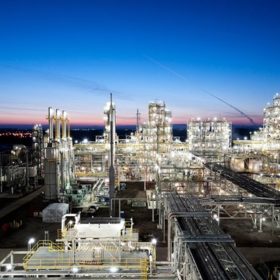
China: REC Silicon reduces stake in 20,000 MT polysilicon JV
The Norwegian polysilicon producer saw its stake in the joint venture (JV) with Chinese silicon material manufacturer, NSF reduced, after the latter agreed to provide all of REC Silicon’s outstanding capital contribution for the project.
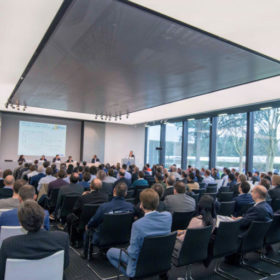
TÜV, NRW solar module workshop goes international
The module workshop hosted by TÜV Rheinland and Germany’s energy agency, NRW was held for the first time in English and for an international audience. The main conclusion of the event, held in Germany, is that the latest technologies and trends should be constantly observed and evaluated.

2018 pivotal year for Greek energy, new PV auctions planned
2018 is going to be a pivotal year for Greece’s energy sector, including in renewables. An auction for new solar PV plants is expected to attract global attention; however other changes currently underway are also expected to be effective for the long term development of the Greek PV industry.

Ireland to issue grant aided pilot scheme for PV microgeneration this summer
The scheme, which was not included in the Renewable Electricity Support Scheme (RESS) unveiled by the Irish government in September, will initially be targeted at residential self-consumption.
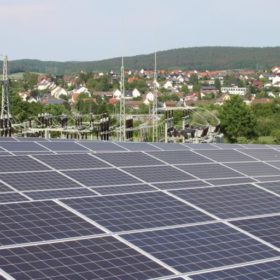
Germany installed 1.75 GW of PV in 2017
New additions for December totaled 157.9 MW. More than half of this capacity comes in the form of ground-mounted solar PV power plants.
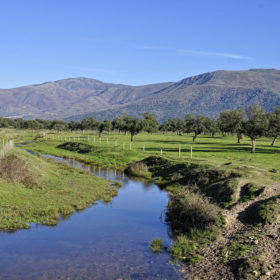
Ellomay secures financial hedge for 300 MW solar project for Spanish spot market
The Talasol project, which the Israeli solar company acquired in May, plans to sell power to the Spanish spot market starting from 2020. The financial hedge will cover the supply of between 3,500 GWh and 3,700 GWh for a 10-year period.
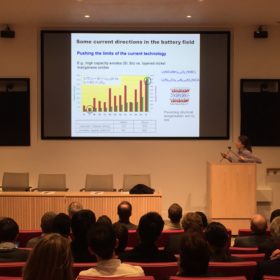
Battery storage challenges: Materials, longevity and project management
An academic event held last week in the U.K. presenting the results of two major research projects on energy storage provided an update on the current and future directions of battery storage technology and development.

Belgium: Flemish solar market grew by 188 MW in 2017
Almost all of last year’s newly installed PV capacity comes in the form of residential PV systems not exceeding 10 kW, installed under net metering.

EU grants €578m for France-Spain renewable energy transmission link
In what is the largest ever energy grant to be issued by the EU, France and Spain’s interconnection capabilities are to be boosted to 5 GW once an undersea cable across the Bay of Biscay is finalized.
