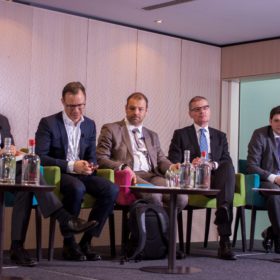
SolarPower Europe summit opens, 6.7 GW installed in Europe in 2016
The European solar market decreased by 21% last year. This disappointing if not unexpected news opened SolarPower Europe’s annual summit in Brussels today. Grid integration of Europe’s solar capacity, EU market rules for protecting the ‘prosumer’ and reforms to the continent’s faltering Emissions Trading Scheme were major themes during the plenary session.

UK Solar rate hike could add GBP 1.8 million to schools tax bill
New research suggests that schools in England and Wales that have installed solar panels will collectively face an additional GBP 1.8 million in taxes, as the Government pushes forward plans to remove tax exemptions on small commercial installations.

Manz expects to return to profitability this year
Large orders for the solar segment are expected to enable the company to return to profit in 2016. Last year, Manz was able to slightly increase its revenue, although it is still struggling with losses.
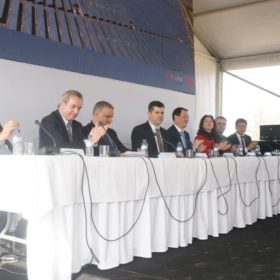
Welink and CTIEC bag EPC contract to build 220 MW PV plant in Portugal
Work on this huge solar project without subsidies is expected to begin in the first quarter of this year.
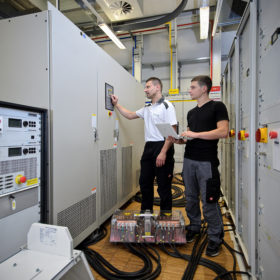
Germany’s Fraunhofer ISE to open testing facility for power electronics & grid integration tech
At the facility, the German scientists will test devices for power electronics and grid technologies in the multi-megawatt range.
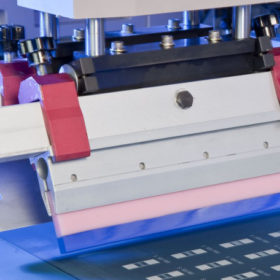
Materion completes acquisition of Heraeus target materials business
German technology group Heraeus and U.S. company Materion Advanced Materials have announced the completion of the latter’s acquisition of the target materials business belonging to Heraeus.
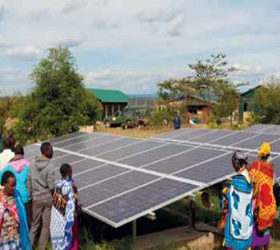
EU supports Africa’s renewable energy and solar development with €300 million
The European Commission has decided to support the Africa Renewable Energy Initiative with €300 million ($317.7 million). The funds are intended to leverage up to €4.8 million ($5 billion) and to help finance 19 renewable energy projects totaling about 1.8 GW.

KACO New Energy to ship 300 MW of inverters to South Korea
The German firm signs framework agreement with DNE Solar for the delivery of 300 MW of string inverters to be installed across South Korea.

Singulus receives new order for CIGS production equipment
Singulus technologies has announced the signing of a contract worth more than €20 million to supply systems to a Chinese module manufacturer, the subsidiary of a major public energy company.

Enel Green Power converts Italian module factory to production of bi-facial, heterojunction technology
Italy’s ENEL will invest €80 million ($84.4 million) to convert its PV module manufacturing facility, in southern Italy, from amorphous silicon to bi-facial heterojunction modules. ENEL expects to launch its new modules in 2018 and to reach a capacity of 240 MW in 2019.
