
Average silver price expected to drop 1% to $24.80 per ounce this year
According to the Silver Institute, global industrial silver demand is expected to grow 8% this year due to strong demand in all key sectors, including the PV industry.
Making the case for perovskite quantum dots
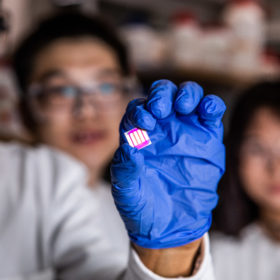
Quantum dots, a type of semiconductor based on tiny nanometer sized particles, are a cause for excitement in many disciplines thanks to their unique electronic properties. In solar cell technology, quantum dots fabricated from perovskites could have several advantages over more commonly researched “bulk” perovskite materials, and researchers are beginning to take note of these. A group of scientists in China evaluated recent progress in perovskite quantum dot solar cells, noting both strong potential and a long way to go for this early-stage technology.

‘Solar and wind deployment could not now be stopped if we wanted to’
BloombergNEF’s Jenny Chase has surveyed the state of affairs in world solar for clean energy journal Joule and said the technology’s historic ability to surmount obstacles – and persistently confound analysts’ predictions – should offer a reason for hope.
Zinc batteries: Old technology brings new values
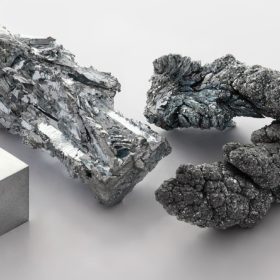
In battery storage, there is no silver bullet chemistry type and as we move towards more ambitious decarbonization goals, room is being made for diverse systems. As an old technology with new vitality, zinc-based batteries are edging closer to commercialization, leveraging their unique ability to be configured for short and long duration operation. They are safer, longer lasting and, in some cases, reportedly up to 50% cheaper than lithium-ion batteries and, following recent game-changing advances, the prospects for zinc look much more exciting. pv magazine sat down with the manager of the newly established, global Zinc Battery Initiative, Josef Daniel-Ivad, to discuss the technology’s market position and developments.

The Hydrogen Stream: Fortescue develops tech based on photocatalytic water splitting coupled with solar
Australia’s Fortescue Future Industries wants to develop a green hydrogen technology based on photocatalytic water splitting coupled with solar radiation. Elsewhere, Linde has signed a long-term agreement with German chemical company BASF for the supply of hydrogen and steam in France and Nel has received a contract for a containerized PEM electrolyzer and light-duty hydrogen fueling station package from an unnamed U.S. power utility.
Doped carbon for a reliable lithium sulfur battery
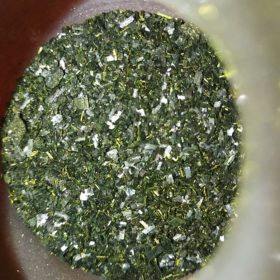
Scientists in South Korea developed a porous carbon material that, when applied as a coating to the separator film in a lithium-sulfur battery, was shown to reduce an unwanted side effect and improve the battery’s performance and reliability. The coating is based on methylene blue, a type of salt commonly used in textile dying.
Revolutionizing tracker resiliency with Vanguard 1P
In pursuit of unlocking the true potential of 1P and eliminating barriers to utilization, TrinaTracker has developed Vanguard, a new 1P tracker solution designed to conquer the terrain it’s installed on and the wind it will face. In this pv magazine Webinar, Trina Solar will outline the philosophy that went into the design of Vanguard 1P, highlighting how the system has been optimized to perform in a variety of complex scenarios and be installed nearly 20% faster than prior solutions.

Powering up PERC-perovskite tandem cells
Perovskite-silicon tandem cells offer one of the surest pathways to much higher solar efficiencies, one that has moved close to commercialization in the past few years. Much of the work getting to this stage has naturally focused on developing a viable perovskite top cell. Optimizations to the silicon layer underneath, however, will also be important to the overall device function and efficiency. Scientists in Germany examined five different silicon cell concepts similar to those in mass production today, finding that with a few optimizations these could reach efficiencies up to 30.4%.
The Hydrogen Stream: New fuel cell design to solve longstanding problem of overheating
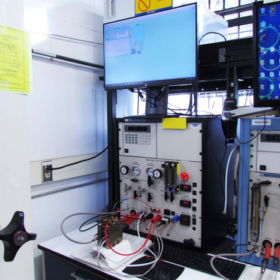
Los Alamos National Laboratory researchers developed a new polymer fuel cell that is claimed to solve the long-known issue of overheating. Furthermore, Mexican cement producer Cemex invested in HiiROC, a UK-based hydrogen production startup, which developed a scalable technology that uses thermal plasma electrolysis to convert biomethane, flare gas, or natural gas into hydrogen at a reportedly lower cost than competing solutions.

The Hydrogen Stream: Novel fuel cell tech based on liquid-organic hydrogen carrier
Germany’s Schaeffler is developing a hydrogen fuel cell that runs on a liquid organic hydrogen carrier, and Australia’s H2X Global has formed a joint venture with Indian automotive components manufacturer Advik Hi-Tech to manufacture hydrogen fuel cells, generators and vehicles.
