
Renewables cheaper than fossil fuel plants by 2030
A report by McKinsey & Company reinforces the widely-held view renewables will supplant fossil fuels in the energy system but also joins the chorus of voices warning the world is on track to fall well short of limiting global temperature rises this century to 1.5C.
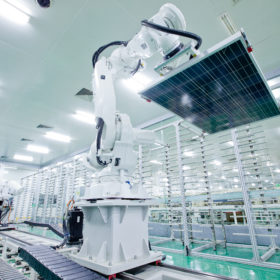
JinkoSolar announces 23.01% efficiency for n-type monocrystalline panel
The PV module relies on Jinko’s TOPCon mono cell technology, for which a record efficiency of 24.9% was announced last week. TÜV Rheinland has confirmed the result.
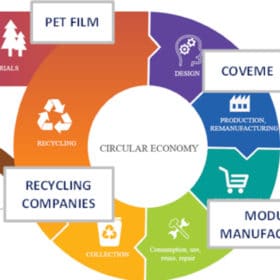
Coveme: Pushing for a greener solar industry with emphasis on material innovation
Separating backsheets from solar PV modules is one of the most challenging issues for module recycling, because of the glues involved. Given the difficulties in pulling apart the layers, which are typically made of virgin plastic, they are usually burned. However, there are some industry players taking steps to improve the design, recyclability and reusability of backsheets. One of them is Italy-based Coveme, which recently partnered with pv magazine’s UP Initiative. In the following interview, CEO Amedeo Maccolini explains what the company is doing to step UP its sustainability game.

Total corporate funding into solar sector rose 24% in 2020
Despite a slow start and a downturn in venture capital and private equity funding, total funding saw a significant rise, including the largest amount of projects acquired in a single year to date and the largest amount of securitization financing ever in a year.
Fossils fuels to lead as Africa doubles its energy capacity this decade
Researchers led by Oxford University have put together a comprehensive forecast of energy developments across the African continent up to 2030. Based on analysis of data on more than 3,000 power plant projects across 54 countries, the report predicts a doubling of generation capacity in Africa over the next decade, with fossil fuel projects to represent 60% of the total. Based on this, the authors warn of the need for both the public and private sectors to change to tack to avoid a missed opportunity for renewable energy.

Hard carbon for a high energy sodium battery
Scientists in Japan demonstrated a hard-carbon electrode that can greatly increase the capacity of a sodium-ion battery. With further work on the long-term performance, the discovery could make sodium-ion batteries better able to compete on energy density with their lithium-ion counterparts.
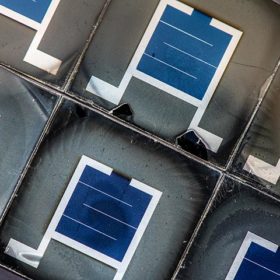
The state of the art in perovskite tandems
A new paper from scientists in China and Canada examines the recent progress in the development of perovskite-silicon tandem cells, finding a technology that’s poised for rapid commercialization, with a few research challenges still to overcome. These are primarily related to ensuring the perovskite layer can match the lifetime of the silicon cell underneath.

Capacity utilization a key issue in a world energized by renewables and hydrogen
A European research team has investigated the implications of renewable energy intermittency on capital utilization across a future electricity-hydrogen system, including transmission and storage infrastructure. According to its findings, idle capacity substantially increases the system costs and limits wind and solar development.

The geopolitical impact of hydrogen
In an interview with pv magazine, Indra Overland, head of the Center for Energy Research at the Norwegian Institute for International Affairs, explains how international hydrogen strategies may play out in the upcoming decades. Plans and roadmaps will not be enough to turn a hydrogen economy into reality and its success will depend on becoming cost-competitive vis-à-vis other solutions in several areas, he says.

Sustainable pumped-hydro across 616,818 sites
Australian researchers have identified more than 600,000 sites suitable for closed-loop pumped-hydro energy storage projects across the globe. “Off-river” pumped-hydro is not only able to overcome the typical topographical issues of conventional pumped-hydro but is also cheaper.
