The precise chemical nature of perovskite defects
A research group in Okinawa, Japan has been able to observe and characterize structural defects in an organic-inorganic perovskite solar cell. Their findings could help to inform future approaches to optimizing and improving perovskite stability.
Hybrid power plants, and the move beyond LCOE
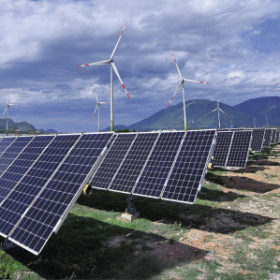
A new paper published by the U.S. National Renewable Energy Laboratory delves into the potential of hybrid power plants combining wind and solar generation. Development of such plants, according to the lab, is driven by the need to increase profitability and consider metrics beyond levelized cost of electricity, taking into account time varying revenues and better managing these renewables inherent variability.

Webinar Q&A: Avoiding the ‘green halo’ effect
Earlier this month, pv magazine held its first webinar under the UP sustainability initiative, looking at greenwashing versus verifiable sustainability. Initiative partner SMA and Professor Dustin Mulvaney shared their insights in a lively discussion. Many questions were submitted by the webinar participants. What follows are those we did not have time to answer.

New methodology for assessing value of PV in uncertain markets
A new process is described as a tool to assess the value of deferring, relocating or abandoning PV projects under development in uncertain market conditions. Researchers say the model may help investors reconsider projects which could be prematurely rejected based on traditional analytical approaches.

Webinar Q&A: Performance modelling for accurate energy output and yield prediction of bifacial PV systems
In our recent webinar, held in partnership with JinkoSolar, on the impact of bifacial modules and modelling their yield under varying environmental conditions and system setups, JinkoSolar’s Andrea Viaro discussed innovations in bifacial module design, and implementing these into a system to positively impact the return on investment. Teun Burgers, a Senior Researcher at ECN.TNO also delved into the simulation of bifacial PV systems, and treated us to a closer look at ECN’s BIGEYE simulation model. Here, the two presenters answer some more of the questions posed by the audience during the webinar.

Clean energy must be rolled out six times faster
To have any hope of restricting global heating to a maximum of 1.5 degrees Celsius, the renewables success story which saw 108 GW of solar deployed last year needs to be cranked up to the next level – and fast.

The weekend read: Offgrid goes global
Offgrid solar power has emerged as a vital part of the PV business across the African continent, and is now spreading to other parts of the globe, mainly with solar home systems and microgrids. pv magazine examines the core issues of financing, business models and the quest for user data.

Scientists hit 21.6% perovskite cell efficiency using concentrator PV
An international research group achieved the result on a 9 sq mm, triple-cation based, n-i-p structured perovskite cell using low solar concentration levels. Device instability, however, remains a challenge.
Success factors for hybrid microgrids
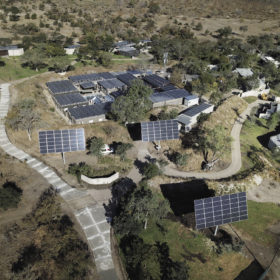
When it comes to hybrid microgrids, writes Fabian Baretzky, senior business development and sales manager for Dhybrid Power Systems, the incorporation of various sources of energy and complex requirements for long-term stability of the energy supply require expertise and an effective energy management system.

A new catalyst to split hydrogen from seawater
Scientists at the University of Houston in the United States have developed a new catalyst which they say can efficiently produce hydrogen from seawater. The group says that its discovery significantly advances the development of seawater electrolysis for large-scale hydrogen production.
