
Switching to solar could save aid missions half a billion per year
A new report published by Chatham House for the Moving Energy Initiative examines energy spending of humanitarian aid organizations. The authors claim that with modern clean energy systems the sector could save US$517 million per year on fuel costs, as hitherto the majority of refugee camps and other facilities are run on diesel gensets.
Over 400 investors call on world’s leaders to address climate change
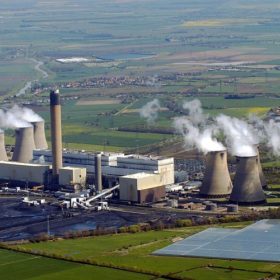
A total of 414 investors managing US$32 trillion in assets have called on the world’s policy makers to take action against climate change. It has been called the “single largest policy intervention” of its kind.

COP24 live blog – Day 1
Max Hall will be attending the COP24 climate change conference in Katowice, Poland on behalf of pv magazine and bringing you all the developments as they happen, as well as sniffing out anything solar related.

Positive signals from China boost 2019 forecasts
On November 2, China’s National Energy Administration held a symposium to evaluate the results of the 13th Five-Year Plan for solar PV development at its halfway point, discussing the adjustment of PV and thermal generation targets in the plan. As a result of this, there is renewed positivity regarding China’s domestic solar demand in 2019-2020.

EU confirms increased renewables ambition as an early Christmas present
Political bloc wants to source at least 32% of energy from renewable generation by 2030 and signed off on the more ambitious target as a statement of intent during the first week of the Katowice climate change conference.
A call to action
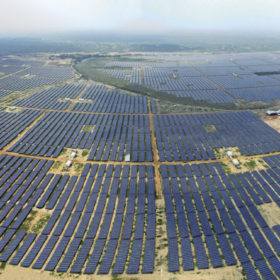
Solar PV has come a long way as a power generation technology. As highlighted in SolarPower Europe’s Global Market Outlook for 2018 to 2022, solar added 98 GW of net generation capacity last year, eclipsing all other forms of electricity generation. But solar needs to do a lot more, and to do it very soon if we want to limit greenhouse gas (GHG) emissions and keep global warming to below 1.5°C from pre-industrial levels.

IRENA clarion call for G20 leaders may fall on deaf ears
In an advisory requested by Argentinian hosts, agency reports on the role solar can play in firing the energy transition up to 2050 – but was anybody listening?
Bifacial tracker pitch an important design factor in maximizing energy gain
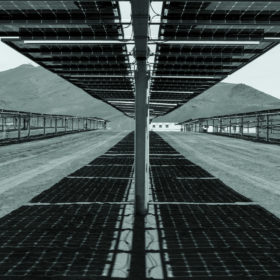
The pitch of bifacial trackers is an important design factor in maximizing energy gain, says Soltec, which recently spoke during a pv magazine webinar on how its trackers can help to increase energy yields in large-scale bifacial PV installations. Read on to discover the answers to your questions from albedo to backtracking and everything in between.
Floating PV finds a virtual battery in hydropower
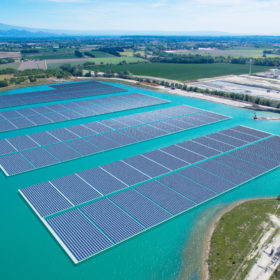
Accumulated water at hydropower facilities can work as a virtual charge during the daytime while direct solar power is being used, according to a study. Reservoir-based hydropower plants will offer the best such option, as they are highly controllable and offer abundant water levels.
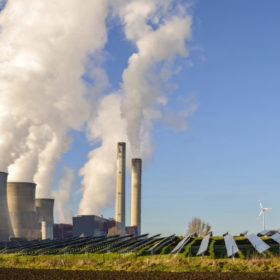
Some 42% of the world’s coal generators run at a loss
Carbon Tracker has released a report claiming it is cheaper, in many markets, to construct new renewable generation assets instead of running legacy coal-fired power plants. Billions could be saved for customers, while profits in the two-digit billion-dollar range look set to be lost by the coal industry.
