
US Section 201 case mars otherwise strong quarter for solar funding, reports Mercom
Mercom Capital’s latest report shows relatively robust funding for solar globally but a slowdown in the United States due to the Section 201 investigation.
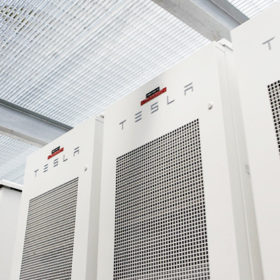
Doubling of global renewable capacity by 2030 could drive 66% storage cost reduction, IRENA says
The International Renewable Energy Agency calculates that storage capacity could triple by 2030 if current renewable energy capacity doubles, with battery prices potentially driven down by 66% from current levels.
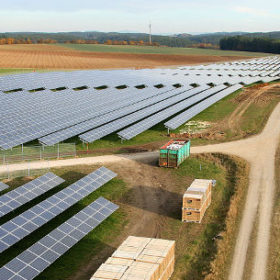
Solar fastest growing energy source in 2016, finds latest IEA report
The International Energy Agency’s Renewables 2017 report finds that solar PV capacity grew 50% last year, underpinning a 12% increase in this year’s renewables forecast and prompting the IEA to forecast 1,000 GW of clean energy by 2022.

Suniva, SolarWorld double down on trade proposals
As the first half of the Section 201 remedy hearing comes to a close, Suniva and SolarWorld have made a case for a combination of tariffs and either quotas or a 74-cent minimum module price, and foreign governments have sought exemptions.
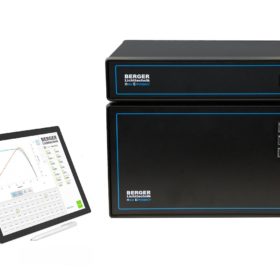
Flasher trends at EU PVSEC
Discussion about the adaptation of standards for Flashers, and the way in which high-performance and bifacial modules should be measured goes on. Berger Lichttechnik is now launching a new cell tester and Halm reports a three-digit number of delivered cell testers.
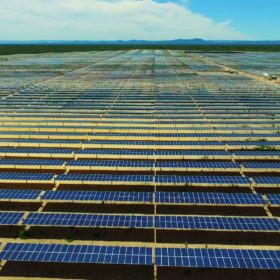
Renewables trouncing nuclear, report shows
Global nuclear power generation increased by 1.4%, whereas solar power output grew by 30% and wind by 16% in 2016, with all renewables representing 62% of global power generating capacity additions, finds the 2017 World Nuclear Industry Status Report.
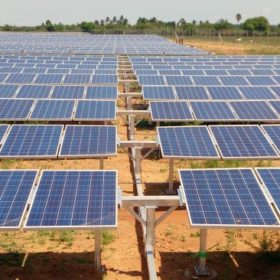
Global solar installations to top 100 GW despite U.S. slowdown, says EnergyTrend
Annual PV demand in the U.S. to retreat 15% this year, but global demand for solar PV installations is at an all-time high, finds new research by EnergyTrend.
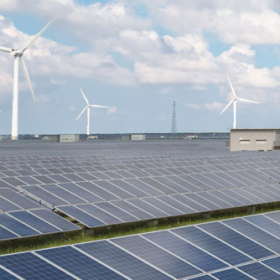
DNV GL: Renewables to account for 85% of global electricity by 2050
A new report from DNV GL forecasts a bright future for renewable energy, predicting that by 2050 electricity demand will increase 140% to become the largest form of energy consumed, and that 85% of this electricity will be generated from renewable sources.

JinkoSolar and Enphase collaborate on Eagle AC module
The module and microinverter giants have worked together to introduce a new AC module comprising Enphase’s IQ6 microinverter affixed to JinkoSolar’s mono PERC modules.

International Solar Alliance requires five more countries to ratify it
Somalia is the latest country that has ratified the ISA framework agreement, taking the number of ratified countries to 10. Five more required before ISA can exist as a legal body.
