Landscape change indicators for agrivoltaics
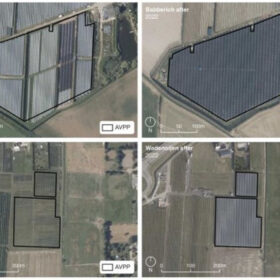
Dutch scientists have developed new landscape change indicators (LCIs) for agrivoltaic projects. The novel methodology is meant to assist policymakers and project developers mitigate the visual and environmental impact of agrivoltaic facilities.
Overhead vs. vertical agrivoltaics
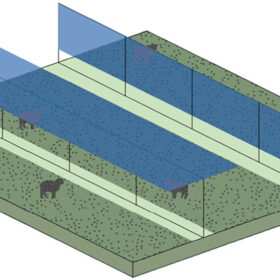
A survey conducted by Dutch researchers has compared the visual impact of overhead and vertical agrivoltaics farms on nearby residents and has found that vertical arrays look less invasive.
Research finds agrivoltaics have payback time of less than five years in Portugal
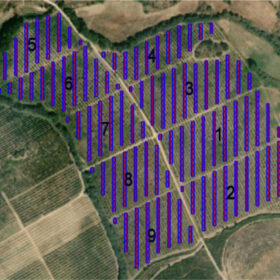
A group of researchers from the University of Lisboa and the Military Academy reported on the viability of agrivoltaics in Portugal. It found that spaced rows of PV modules combined with shadow-friendly crops had the most promising return and a payback period of less than five years.
RWE testing agrivoltaics on former opencast mine
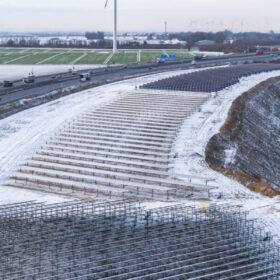
The power utility said it is testing three different agrivoltaic concepts at the Garzweiler opencast mine in western Germany.
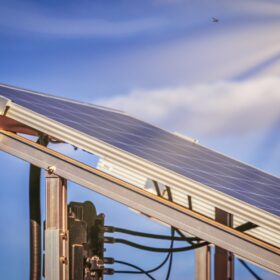
Optimal tilt angle for agrivoltaic projects in Mediterranean region
Scientists in Turkey determined the optimal tilt angle for agrivoltaic projects associated with different crops in the central Mediterranean region, and other regions with similar latitude and climatic conditions.
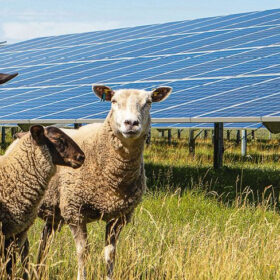
Has the US caught up with European agrivoltaic deployment?
With so much more agricultural real estate than Europe, the United States is building on the body of research built up across The Pond and rolling out solar panels on farmland at an impressive rate.
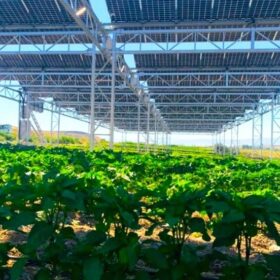
Turkey launches agrivoltaics research project
Turkey’s new agrivoltaics project, under the ODTÜ-GÜNAM Center for Solar Energy Research and Applications’ Livinglab initiative, will allow researchers to test products and production processes by developing tracker systems with control algorithms specially designed for specific crops.
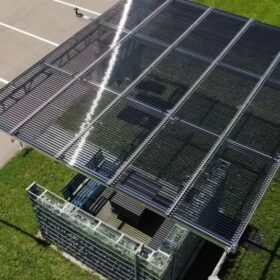
Thin-film solar is the future of agrivoltaics
In contrast with traditional panels, thin-film solar modules are much more adaptable to these agricultural situations, thanks to their flexible, lightweight design.
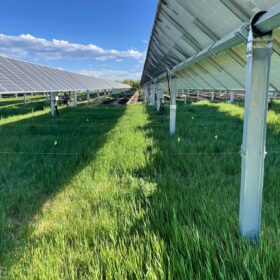
Agrivoltaics may increase forage quality in semi-arid regions
New research from the United States showed agrivoltaic plants on grassland may not only maintain grass productivity but also increase forage quality. The scientists took their measurements at the Jack’s Solar Garden (JSG), an elevated, south-oriented agrivoltaic research facility using single-axis-tracking systems near Longmont, Colorado.
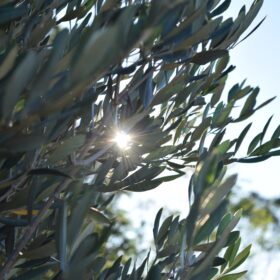
French olive oil sector seeks relaunch via agrivoltaics
The Oil’Ive Green network of producers, which aims to cultivate 50,000 new hectares of olive trees by the end of the decade, has joined forces with Iberdrola to install agrivoltaic power plants on trackers, in order to protect farms from weather hazards and global warming.
