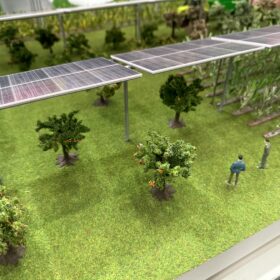
Japan suspends incentives for 342 agrivoltaic facilities
The Japanese authorities have suspended feed-in tariffs (FITs) and premiums for 342 agrivoltaic projects due to violations of new agricultural land regulations. Analyst Makoto Tajima tells pv magazine that this move could hinder the development of agrivoltaics in land-scarce Japan.
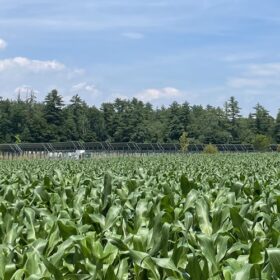
The evolving art and science of agrivoltaics
At Bluewave, integrating solar technology with traditional farming practices isn’t just a concept, it’s the new standard. Jesse Robertson-DuBois, director of sustainable solar development, shares insights on the transformative journey of agrivoltaics within the industry.
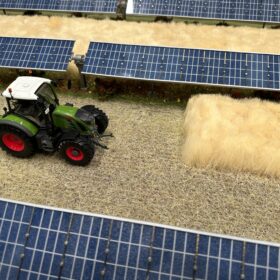
Researchers find agrivoltaics have LCOE of $0.039/kWh, 7-year payback time in India
Indian researchers have compared the performance of an agrivoltaic system to monofacial and bifacial rooftop PV systems, and have found that the agrivoltaics setup had a shorter payback time and lower levelized cost of energy. Their analysis of performance considered panel temperature, power output, land equivalent ratio, and reliability.

Are there consumers willing to buy ‘agrivoltaic’ apples?
A new survey from Germany shows that consumers may show a high willingness to pay (WTP) for apples produced in agrivoltaic facilities. The research also highlighted that consumers also consider parameters such as organic farming, plastic usage and origin, among others.

Agrivoltaics for apricots
French developer Solveo Energies has developed a 247 kW agrivoltaic facility spread across 3,500 m2. The system features trackers controlled by the Cultiveo Dynamique algorithm, to protect an apricot farm in Pyrénées-Orientales, France.
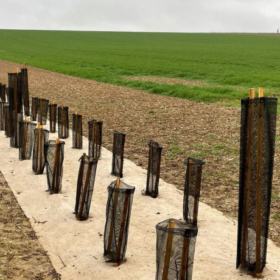
Hedge planting for community acceptance of agrivoltaics
The Hauts-Plateaux de l’Yonne Energy Association (EHPY) has started planting 5.8 km of hedges in central France to integrate 14 agrivoltaic projects into the landscape. The initiative aims to improve project acceptance and promote biodiversity.
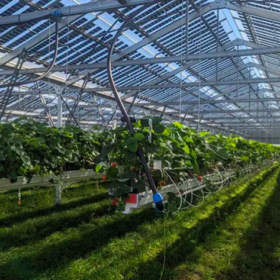
Mondragon Assembly supplies agrivoltaics production line in Greece
Mondragon Assembly says it is supplying Greece’s first manufacturing line for agrivoltaics. The production line has a capacity of 150 MW, with plans to upgrade to 300 MW, and is tailored for semi-transparent solar modules.
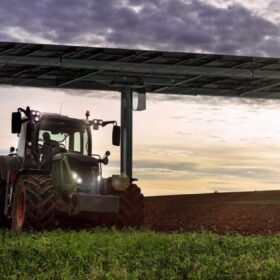
Austrian startup offers double-axis tracking system for agrivoltaics
Anywhere Solar says its new trackers have a module area of 75 m2 and can host PV systems up to 19 kW in size. When deployed horizontally, the systems allow vehicles up to 4.3 meters high to pass underneath.
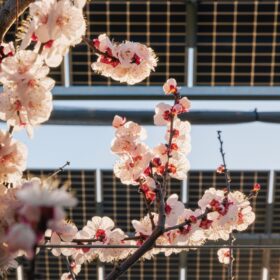
IEA-PVPS launches action group on agrivoltaics
IEA PVPS is about to start a new format for expert engagement: an Action Group on Agrovoltaics; a collaborative effort to harness the synergy between agriculture and solar energy generation. Through international cooperation and interdisciplinary engagement, the group aims to unlock the potential of agrivoltaics, optimizing land use efficiency, enhancing agricultural resilience to climate change, and fostering social consensus towards solar energy development.
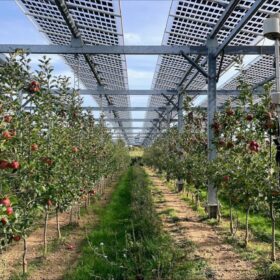
Czechia introduces first rules for agrivoltaics
Under Czechia’s new rules for agrivoltaics, farmers and developers will not need approval to change land designations and zoning plans for agricultural areas devoted to PV generation. The provisions currently only allow agrivoltaics to be deployed in orchards and vineyards.
