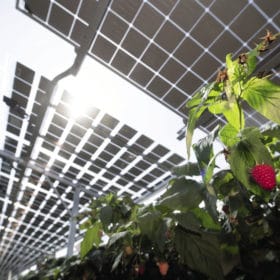
Bangladesh’s first agri-PV plant set to get green light
Bangladesh’s first agrivoltaic solar power plant is set to receive government approval on Wednesday, Dec. 29.
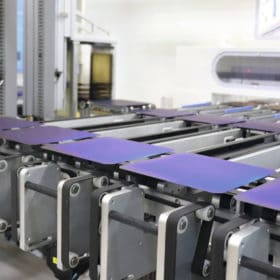
A year in PV: Technology trends in 2021
The PV industry in 2021 has largely been defined by disruption: Price increases from raw materials to final shipping have led to shortages in PV module supply and project delays the world over. Despite these upsets, innovation has continued at pace, and the year has seen plenty of technological twists and turns that are sure to spell good news for solar in the long run. Read on for a look back at some of the biggest developments.
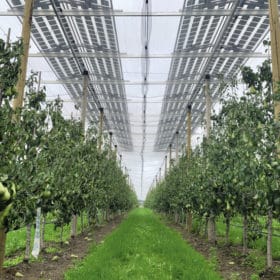
Stepping UP in 2021: #1 How agri-PV could address two of the biggest sustainability challenges of our times
2021 marked the second year of pv magazine’s UP Initiative where we shined a spotlight on sustainability in the solar industry. Over the course of 12 months, we focused on four key issues. First up was agrivoltaics – the combination of agriculture and solar energy – in recognition of this emerging market. The goal was to understand the potential benefits and economic, political, and technical challenges of such an innovative partnership. Read on to discover our coverage from this quarterly theme and watch out over the coming days for the topics of Workers’ rights, Sustainable electricity and corporates’ critical solar role, and Urban Solar.
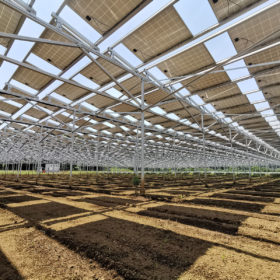
Japan releases new guidelines for agrivoltaics as installations hit 200 MW
The Japanese authorities have released new guidelines for the development of agrivoltaics projects and have excluded installations that do not host crops or livestock in the planning phase. Analyst Takeshi Magami says that agrivoltaics can be developed under the feed-in tariff scheme, in the free market via PPAs, or through a rebate scheme covering 50% of initial investments.
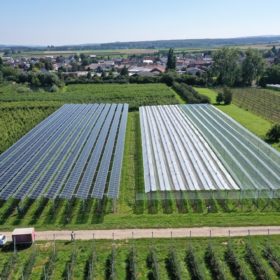
The case for agrivoltaics in India
There is enormous potential to develop the agrivoltaics sector in India, as about 60% of the country’s land area is devoted to agriculture. However, the rollout of projects that pair farming with PV cannot proceed until the authorities iron out a number of policy concerns and regulatory issues.
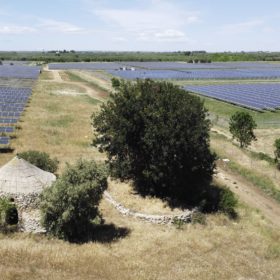
The weekend read: Green shoots appearing in the Italian PV market
A surge of Italian PV project activity is soon expected if the local authorities get out of the way. With the market, financial and policy settings in place, the market is set to see a return to bustling PV project activity, with regulatory reforms clearing the way forward, reports Sergio Matalucci in Milan.
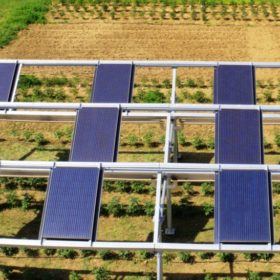
Iberdrola announces winners of agrivoltaic contest
The Spanish energy company received 110 proposals from 32 countries. Three of the four selected projects are aimed at deploying agrivoltaic solutions.

Which crops pair well with solar?
Rapidly falling prices of solar panels have created an impetus for the construction of solar fields, which are often perceived as competing with crop production.
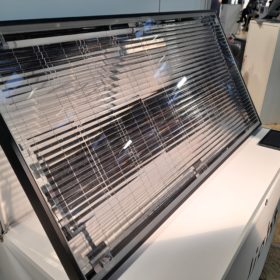
Insolight unveils 20.1%-efficient translucent photovoltaic panel for agrivoltaics
Insolight has developed a translucent monocrystalline solar panel with a nominal power of 106 W and a power conversion efficiency of 20.1%. The solar cells are covered with protective glass and optical lenses to concentrate and direct sunlight onto them at around 100 times the intensity of standard solar glass.

Faster permitting crucial to help Italy add 70 GW of renewables this decade
In a chat with pv magazine at the Key Energy event in Rimini, Roberta Valenziani, of Italian trade body Elettricità Futura, explained the factors preventing Italy’s PV market from having a renaissance. She said the country has Europe’s longest delays and highest costs for obtaining permits for large scale solar.
