
Italy’s Key Energy positions agrivoltaics, utility storage as new market drivers
The latest edition of Key Energy, Italy’s top solar event, shows that the nation is once again poised for growth. It also shows that incentive schemes can turn agrivoltaics and large-scale storage into market drivers like rooftop and ground-mounted PV.
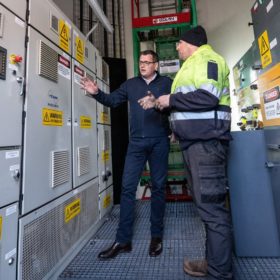
Neighborhood battery plan to maximize solar benefits in Australia
The government of the Australian state of Victoria has unveiled an ambitious plan to install 100 battery energy storage systems by the end of 2026, as part of a broader strategy to support the rollout of more rooftop solar.
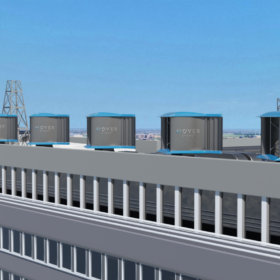
Rooftop-mounted microgrid combines wind, solar, storage
Hover’s first 36 kW installation survived the recent Hurricane Ian storm system that ravaged southwestern Florida.
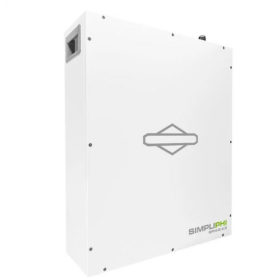
Simpliphi presents integrated storage solution for rooftop PV
Simpliphi, a US-based storage system provider, said its new storage system includes a 4.9 kWh battery and a 6 kW inverter. The solution can be scaled up to 358.8 kWh of storage capacity.
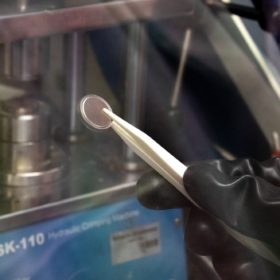
New polymer-based battery electrodes with high stability
UK researchers have developed organic electrode materials to integrate redox-active organic molecules into long-chain polymers. The new electrodes exhibit better cycling performance in lithium-ion batteries, with no apparent capacity decay over more than a thousand charge-discharge cycles.

Australian miner signs baseload PPA contract with Neoen for 24/7 renewables
BHP has signed a 70 MW baseload renewable energy contract with Neoen to meet 50% of the energy demand of its Olympic Dam mining operations in South Australia.

Uninterrupted PV generation without storage
An Israeli scientist has proposed a way to achieve uninterrupted PV power on the moon without using energy storage. The proposal involves the installation of PV panels around a 360-degree latitudinal ring close to one of the moon’s poles. There would be no inter-array shading, and static vertical PV arrays and arrays mounted on single-axis vertical trackers could be viable mounting structures.

Thailand introduces FIT scheme for solar, storage
In an unexpected move, the government of Thailand has introduced a feed-in-tariff (FIT) of THB 2,1679 ($0.057)/kWh over 25 years for solar and a 25-year FIT of THB 2,8331/kWh for solar plus storage.
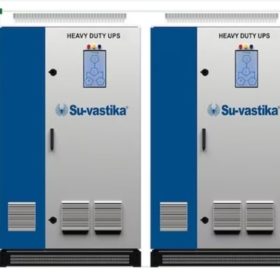
Indian startup launches solar-linkable UPS system for residential, commercial applications
Su-vastika introduced a three-phase uninterruptible power supply (UPS) system with power ratings of 10 kVA to 500 kVA. The backup time provided by the system can be extended by using solar power in conjunction with the battery bank.
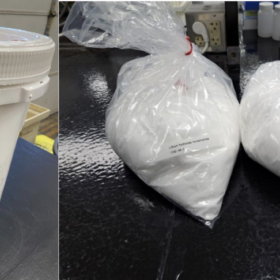
Novel green lithium concept yields battery-grade product in Germany
Australian startup Vulcan Energy announced it produced high grade lithium hydroxide which ‘easily exceeds’ battery grade specification.
