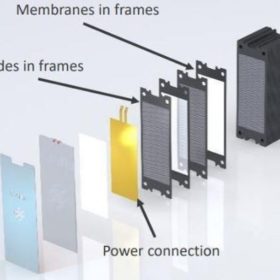
Port-based energy storage relying on organic flow battery tech
A UK consortium is developing an organic flow battery technology that could be used in ports to supply power to visiting vessels and in-port assets such as cranes and port vehicles. The electro-chemistry for the batteries is being supplied by German battery manufacturer CMBlu, which developed a flow battery relying on high-performance energy storage molecules that are entirely organic.
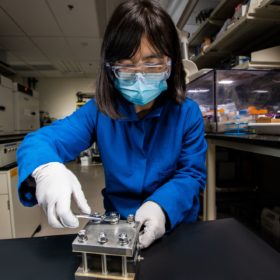
New US license to bring vanadium redox flow batteries to market
The US Department of Energy’s Pacific Northwest National Laboratory has made a third semi-exclusive commercial license for vanadium redox flow battery technologies, in order to help bring the technology to market.
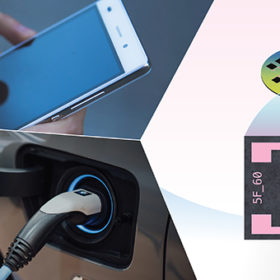
New, powerful way to make micro supercapacitors
Swedish researchers have developed a novel way to manufacture micro supercapacitors, also known as system-on-a-chip, so they are compatible with other components in system circuits and can be easily tailored for different uses.

Full organic battery with 2.8V ouput voltage
The realization of biodegradable batteries is a step closer thanks to research from South Australia’s Flinders University, which has developed a 2.8V organic polymer battery. While this battery was made from synthetic polymers, research lead Zhongfan Jia told pv magazine Australia the team’s future iterations will source “materials directly from nature” saying this promises to reduce waste and reliance on mined materials and could have novel applications in fields like biotech.
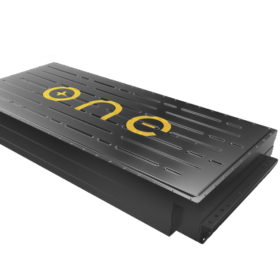
US EV battery manufacturer demonstrates 750+ mile range, raises $65 million
Michigan’s Our Next Energy (ONE) said it will use the funding led by BMW to accelerate R&D and build a US manufacturing facility.
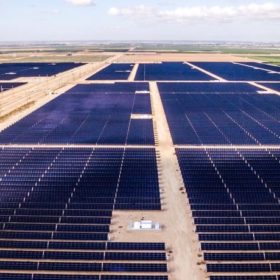
Honeywell batteries deployed at US utility-scale PV, storage project
Hecate Energy is developing a 50MW solar project and 20MW/80MWh storage installation in New Mexico.
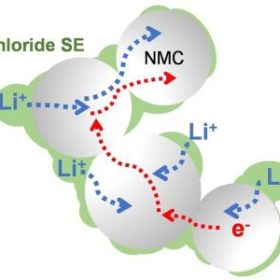
Solid-state lithium-ion battery with capacity retention of over 4mAh/sq cm
Researchers from the University of Waterloo, Canada, have developed a new solid chloride electrolyte that swaps out half of the indium for scandium and offers several important advantages, such as high voltage operation.
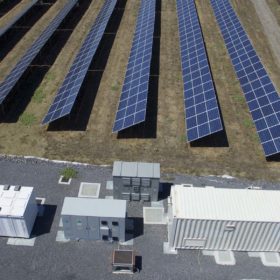
Enel to build 1.6 GW/6.6 GWh of storage under Italy’s capacity market scheme
The planned storage capacity will come from 20 projects selected by Italian grid operator Terna through the latest capacity market auction. Half of them will be located on the island of Sardinia.
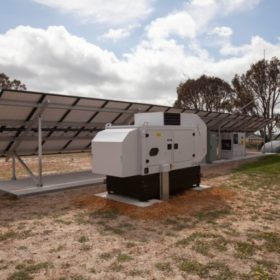
New rules allow distributors to roll out standalone power systems in Australia
The deployment of standalone power systems in Australia’s National Electricity Market is expected to accelerate, as the Australian Energy Market Commission has published new rules allowing distributors to install renewables-based technologies in the nation’s five market jurisdictions.
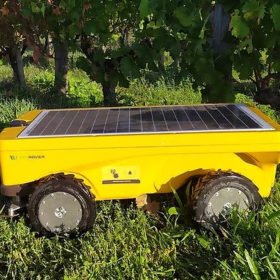
Solar-powered robotic mower for vineyards
Developed by a French start-up, the robotic mower can be used in a 50-unit herd across a property of around 50 hectares and a radius of 20 km. It is powered by polycrystalline cells and equipped with battery storage. The system can operate with a maximum slope of 15% and reach a speed of 300m/h.
