
PPA signed for solar-wind-storage microgrid on Saint Helena
Pash Global, a subsidiary of multinational commodities trader Trafigura Group, has signed a renewables power purchase agreement for a project on the British overseas territory of Saint Helena. The microgrid will help the South Atlantic island’s aim of investing in renewables, reducing diesel dependence and increasing fuel security and price stabilization.

Investors bet $27.5 million that Nanotech Energy’s graphene battery breakthrough is the real thing
The startup claims to be “the world’s top supplier of graphene” and plans to release a non-flammable, environmentally friendly lithium battery that can charge “18 times faster than anything that is currently available on the market” — within the next year.
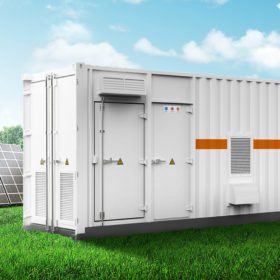
Chinese 202 MW/MWh solar-plus-storage project
Inverter maker Sungrow is supplying the inverters and storage system for China’s largest, 202.8 MW/MWh solar-plus-storage facility. The plant will be connected to a new, 800 kV ultra-high voltage power line.

University of Queensland’s Tesla battery paying for itself
The University of Queensland has released a performance report on the Tesla Powerpack it installed in December 2019. Across a range of revenue streams, the Powerpack is already earning the university some serious cash.
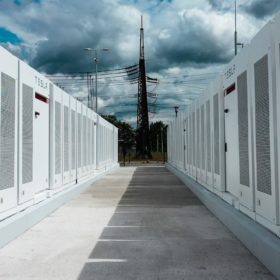
The challenges and tricks of tacking on battery storage to solar projects
Specialist Alencon Systems teamed up with U.S. utility Duke Energy to look at some of the challenges faced by energy companies when adding battery storage to operational solar installations. Do you go for DC-coupled or AC-coupled? And with what sort of grounding scheme?

A 3 GWh redox flow battery factory in Saudi Arabia
German production equipment provider Schmid and Saudi chemical group Sabic are planning to begin activities at a new factory in Saudi Arabia, with production being expected to begin in 2021.
Indian renewables-plus-storage tender secures power for $0.038/kWh
Winning developer Renew Power can opt for solar, wind or hybrid plants along with energy storage systems to ensure round-the-clock power supply.
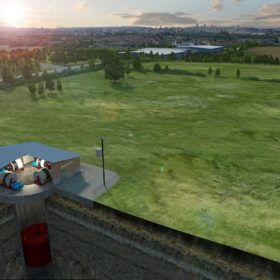
Storing wind and solar with new gravity-based system
Scottish start-up Gravitricity is planning a project to store surplus power from renewables at Port of Leith. A 250 kW, grid-connected prototype facility will have its ability to stabilize the network tested. The system involves a 16m rig over a 150-1500m shaft.
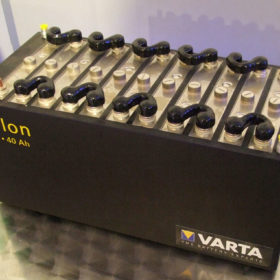
Lithium-ion storage is here to stay
A German-Israeli research group has gathered for three days to discuss which storage technologies may outperform lithium-ion batteries in the future. They concluded that there is no such a thing as a “post Li‐ion” era in sight. They recommended a “side‐by‐side” approach for multiple technologies in different applications, as well as the hybridization of technologies. The group highlighted the strong potential of redox flow storage, which in their view may outperform Li‐ion, although only for stationary applications.

Form Energy claims aqueous air battery provides 150 hours of storage
The holy grail of energy storage has always been low-cost and long-duration. Form Energy intends on deploying a 1 MW/150 MWh system with a Minnesota utility before 2023, an unprecedented energy storage duration if successful.
