
The weekend read: Past the Arctic Circle, one degree at a time
Solar has a small but increasingly important role to play in the Nordic energy transition. And while there is still a gap in PV cost-competitiveness across some markets, interest in solar facades, BIPV solutions and C&I applications is growing.
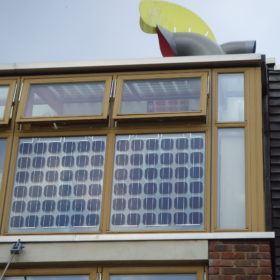
MIT researchers say PV innovations should be deployed in niche markets first
Solar module manufacturers should begin testing new technologies in higher-value niche markets, say scientists at the U.S. institution. For example, bringing perovskite technology directly to the mainstream market remains prohibitive in terms of initial investment but segments such as building-integrated PV or microelectronics devices may offer better routes to commercial maturity.

Innovative PV modules at Intersolar San Diego
In sunny San Diego for Intersolar 2020, we’re seeing a new idea for tracking rooftop solar modules, diodes moving to cell level, two types of building-integrated solar products and some solar hot water.
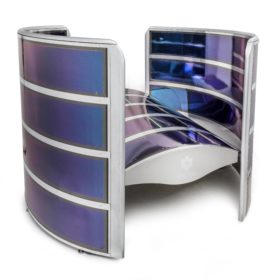
UK designers launch freestanding curved panel
Product development company the Cambridge Design Partnership, working with compatriot solar business Solivus, has developed a curved solar module featuring an organic thin film. The design is based on Solivus’ desire to “create a product so attractive that people would be happy to have one in their garden”.
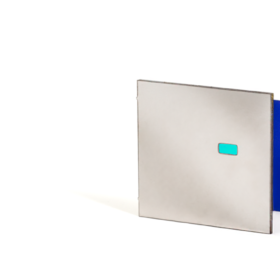
Imec: Perovskite cells can pass the IEC tests in 2020
In 2020, perovskite cells could pass the IEC tests intended for the standardization of solar modules, and in 2022, they could even be mass-produced. In an interview with pv magazine, Tom Aernouts explains the status of work on the new PV technology. He is a research and development manager for thin film photovoltaics at the Belgian research institute Imec.

BIPV: More than the module
Building integrated PV has been described as a place where uncompetitive PV products attempt to go to market. But this may be unfair, says Björn Rau, the technology manager and deputy director of PVcomB at the Helmholtz-Zentrum Berlin. Rau argues that the missing link to BIPV deployment lies at the intersection of the architectural community, construction industry, and PV manufacturers.

Singyes set for name change
Now Chinese state-owned, the developer appears to want to draw a line under a traumatic two-year period which saw its fortunes reversed in dramatic fashion. Effectively now part of China’s Shuifa construction conglomerate, the proposed new name is intended to reflect the fact.

Kaneka tests bifacial heterojunction modules in Japan
The Japanese chemical company has supplied panels for a PV system on the roof of a 7-Eleven store in Kanagawa prefecture.
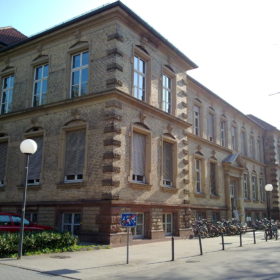
A whole new KIT of solar cell materials
Scientists at Germany’s Karlsruhe Institute of Technology have received €4.5 million from the Carl Zeiss Foundation to begin a project developing an entirely new solar cell concept they say will combine the printability of organic PV, long-term stability of crystalline solar cells and ferroelectricity of lead-halide perovskites.
Solar will power ahead to offer 20% more output for 25% lower module costs within 15 months
PV industry veteran Karl-Heinz Remmers recalls the trajectory of solar power this decade and predicts stronger than expected development for the ten years ahead.
