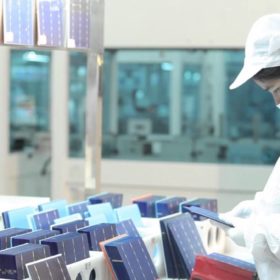
JinkoSolar posts lower shipment volumes, revenues for Q1, remains optimistic despite policy change
As forecast in its 2017 financial report, JinkoSolar shipped around 2 GW of modules in the first quarter of this year. Meanwhile, it did not adjust its forecast for 2018 shipments, in the range of 11.5 GW to 12 GW, despite the Chinese government’s cuts to installations.
2018 global PV market to see negative growth following China backtrack
Global solar PV demand this year will be less than in 2017, on the back of China’s latest policy decision, says TrendForce. Overall, it sees new installs dropping 40% in China to 31.6 GW. The protectionist measures taken by the U.S. will also be weakened by the resulting falling module prices.
IHS Markit lowers 2018 outlook for world PV market to 105 GW
The market research company expects the Chinese market will decline by 15 GW this. Part of this slow-down, however, will be off-set by lower module prices and accelerated demand across markets with pent-up demand. Furthermore, it forecasts another wave of oversupply, low profitability and consolidation in the industry.
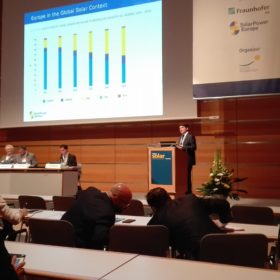
SolarPower Europe revises down global outlook for 2018… but only a bit
Despite recent developments in China, the European solar association believes global newly installed PV capacity this year will reach 102 GW, only 5 GW lower than its previous guidance.
China shakes PV world
The solar superpower’s departure from its ambitious PV targets has shaken the industry and put a dampener on share prices. Analysts from U.S. investment bank Roth Capital expect a module oversupply mountain of more than 30 GW as a result of the policy change.
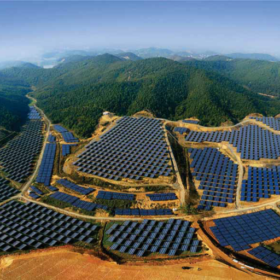
China releases new provisions for PV development in 2018
A notification released yesterday by China’s National Development and Reform Commission (NDRC), Ministry of Finance, and National Energy Administration (NEA) provides new regulatory measures for PV installations in 2018. Further details are as follows.
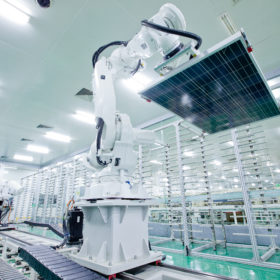
Jinko’s approach to PID-resistant PV modules
Talking to pv magazine, Andrea Viaro, head of technical service Europe for JinkoSolar, explains how the Chinese manufacturer is dealing with PID degradation.
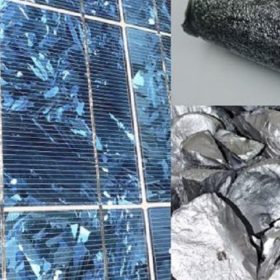
China’s Sunpower Group closes supply deal with Xinjiang Xinte
The $16.4 million contract relates to the supply of raw material towers and cold-hydraulic heat exchangers for an upgrade project by the Chinese polysilicon manufacturer.
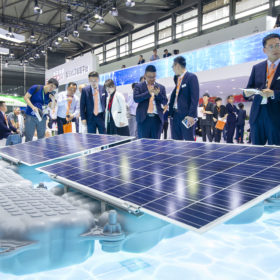
Record-breaking SNEC in Shanghai
The annual SNEC photovoltaic power expo 2018, in Shanghai, closed yesterday after the 12th edition of the world’s biggest PV exhibition. Reflecting the rapid development of China’s PV industry, the scale of SNEC increased from 15,000 sqm at the first exhibition to 180,000 sqm last year and 200,000 this year – a 10% year-on-year increase. Preliminary figures show more than 220,000 visits to this year’s edition, with more than 5,000 industry professionals attending the expo and series of high-level conferences.
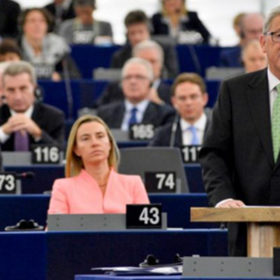
Around 250 signatories call for an end to EU anti-dumping measures
In a letter to European Commission President Jean-Claude Juncker, more than 250 organizations and companies from EU member states have called for the termination of trade restrictions applied to Chinese PV manufacturers. The current anti-dumping and anti-subsidy tariffs – and minimum import prices for Chinese crystalline modules and cells – are due to run until 3 September
