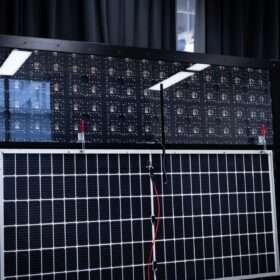
Avalon ST acquires PASAN to expand solar testing operations
Avalon ST, a Swiss LED-based solar simulation and metrology company, has acquired xenon-based solar simulator firm PASAN for an undisclosed sum. The companies will integrate operations and staff in Switzerland China, aiming to expand global reach and product innovation.
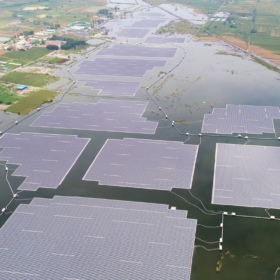
Water-based photovoltaics reach global capacity of 21.18 GW
An international research team has developed an index-based remote sensing method to see trends in the global development of water-based PV. It has found that China currently accounts for 80% of the global total deployed capacity.

Hoarfrost-inspired technique to improve MPPT in PV systems under partial shading
Scientists in China have introduced developments to the RIME optimization method, which takes inspiration from the developmental course of hoarfrost in nature. They have compared it to other MPPT algorithms and found it to be faster and to improve power output.

Deploying floating PV on mine pit lakes, tailings ponds
Researchers in South Korea have conducted a literature review on recorded cases of floating PV plants placed on mine pit lakes and tailings ponds, both of which are byproducts of the mining industry. Looking at more than dozens of cases, they have concluded that mine pit lakes generally provide more stable environments for deployment.
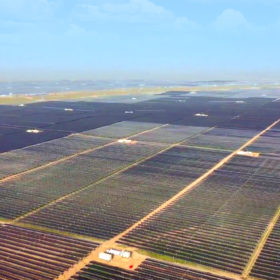
Hybrid deep learning model for PV forecasting in scenarios with considerable fluctuations
Researchers in China conceived a new PV forecasting approach that integrates causal convolution, recurrent structures, attention mechanisms, and the Kolmogorov–Arnold Network (KAN). Experimental results demonstrate that the proposed model outperforms 10 existing forecasting models.
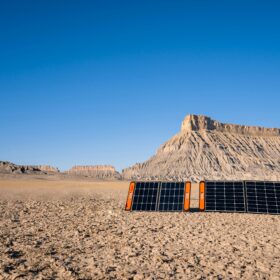
Reducing PV module temperature with air convection
Scientists have analyzed how forced convection PV, free convection with finned plate PV, and forced convection with finned plate PV can reduce solar module temperatures under the climate conditions of Lebanon.

Chinese PV Industry Brief: January–April solar installations hit 105 GW
China’s National Energy Administration (NEA) says that China added 45.2 GW of new PV in April and more than 104.9 GW in the first four months of 2025.
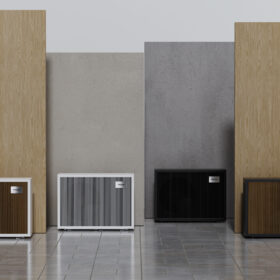
SolarEast debuts new residential propane heat pumps
The Chinese manufacturer said its new heat pump systems have a heating capacity of 4 kW to 16 kW and a coefficient of performance of up to 5.05.

Site selection for PV plants on coal gangue hills
Scientists have developed a novel method to identify which hills of coal waste are suitable for the construction of a solar plant. Their technique integrates GIS and the technique for order preference by similarity to an ideal solution. They tested the new approach suburban areas of Yangquan City, China.

Global PV dataset shows 2019-2022 data
Using Google Earth imagery and 2019-2022 Sentinel-2 datasets, Chinese scientists have developed a two-stage classification framework to obtain the annual global dataset of solar photovoltaic panels at 20-meter resolution from 2019 to 2022.
