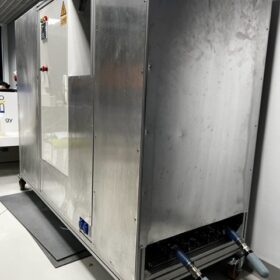
Micro compressed air storage system for residential, industrial applications
A Polish research team has developed a micro compressed air storage system that could be used in residential and industrial buildings where additional low-temperature waste heat is available. The system is claimed to have optimal control of the compressed air expansion process performance via pulse width modulation (PWM).

Powering sprinklers with PV, compressed air storage
A research group in China has proposed to solve the typical high working pressure issues of solar-powered sprinklers by using compressed air energy storage (CAES). According to their findings, combined PV-CAES sprinklers can easily achieve high pressure and low intensity high-quality water spraying.
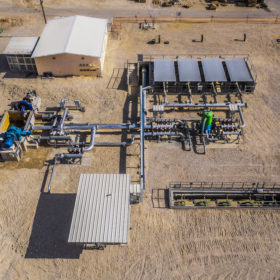
‘Least-cost’ model for compressed air energy storage
Stanford University researchers have created a model to assess how much compressed air storage capacity might be needed for the deep decarbonization of power systems, while compensating for the variability of wind and solar-based power systems. They applied the model to California’s energy system and found that compressed air could be very competitive on a dollars-per-kilowatt-hour basis.
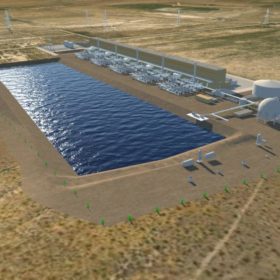
California aggregator to buy capacity from compressed air storage project
Under a 25-year agreement valued at nearly $1 billion, a community choice aggregator has agreed to purchase 200 MW of eight-hour energy storage from Hydrostor’s planned 500 MW facility in California.
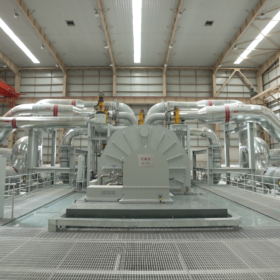
World’s largest salt cavern compressed air storage project breaks ground
Construction has started on a 350 MW/1.4 GWh compressed air energy storage project in Shangdong, China.
World’s largest compressed air energy storage project goes online in China
The Chinese Academy of Sciences has switched on a 100 MW compressed air energy storage system in China’s Hebei province. The facility can store more than 132 million kWh of electricity per year.
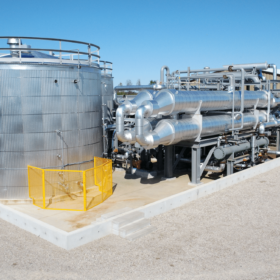
Hydrostor develops 500 MW/4 GWh compressed air storage project in California
Hydrostor has selected an engineering company to provide front-end studies for a 500 MW compressed air energy storage project in California.
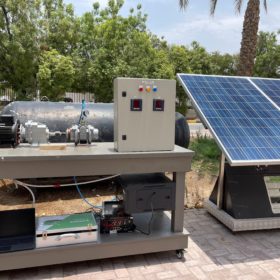
Compressed air storage vs. lead-acid batteries
Researchers in the United Arab Emirates have compared the performance of compressed air storage and lead-acid batteries in terms of energy stored per cubic meter, costs, and payback period. They found the former has a considerably lower Capex and a payback time of only two years.
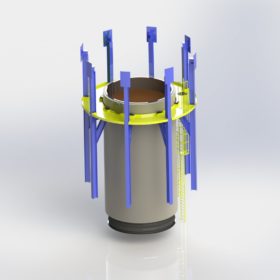
Hybridizing compressed air, thermal energy storage in post mining infrastructure
Scientists in Poland have developed a compressed air energy storage technology using a thermal energy storage (TES) system built into a disused mine shaft. The system works without external heat sources, and utilizes an air compressor, a compressed air reservoir with a built-in thermal energy storage system, and an air expander.

China’s first salt cavern for compressed air energy storage goes online
Huaneng Group has finished building a 300 MWh storage project in Changzhou, in China’s Jiangsu province. The state-owned company has already started operating the facility, which is situated in a salt cavern.
