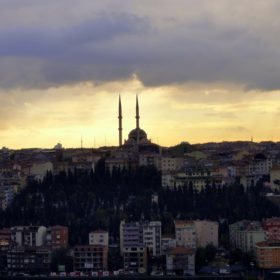
Tracking Turkey’s licensed PV market
Turkey’s unlicensed solar market has been the powerhouse of new PV capacity. Given the unlicensed segment is coming to an end, investors are questioning the prospects of the licensed alternative. pv magazine has tracked the progress and future potential of Turkey’s licensed PV market.

EBRD to help Lebanon’s solar plus storage tenders
The nation has plans for two ambitious renewable energy tenders but the procurement process is dragging and Lebanese institutions lack experience in designing such schemes. A solution will be provided by Europe.
EBRD spearheads effort to auction off renewables in Azerbaijan
The European Bank for Reconstruction and Development (EBRD) has issued an open call to hire a consulting firm to help the government of Azerbaijan to design and launch auctions for renewable energy.
ADB provides $11.5 million for 50 MW PV project in Kazakhstan
The Asian Development Bank has signed an agreement to finance a project in the south of the central Asian nation.
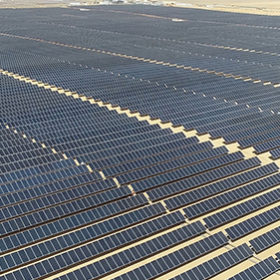
Developers in the dark over reported 25% hike in Benban investment costs
The association that represents developers operating at the 1,465 MW solar project in Egypt – due for completion in June – say they have been told nothing about a rumored rise in investment costs caused by more expensive construction materials.

Development banks unlock €38 million for Ukrainian PV plant
Black Sea and European lenders have loaned €19.1 million each to a 57 MW solar plant in southern Ukraine, as the country scrambles to renew its electricity sector. The EBRD is committed to lending €250 million to renewables projects in Ukraine to help the country to meet its 11% clean energy target for 2020.
EBRD helps Ukraine switch to auctions
The European Bank for Reconstruction and Development is seeking consultants to support Ukrainian authorities in setting new renewable energy targets and to give advice on how to shape the procurement process for large-scale renewables projects.
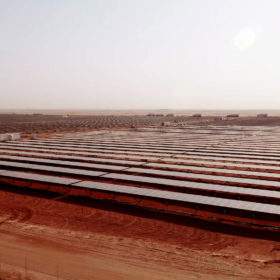
First EBRD-financed slice of Benban project comes online
The 30 MW plant was developed by a consortium led by Infinity Solar Energy SAE – an Egyptian developer operating in Africa and the Middle East – with Germay’s ib vogt, investment vehicle MMID and private equity firm BPE Partners.
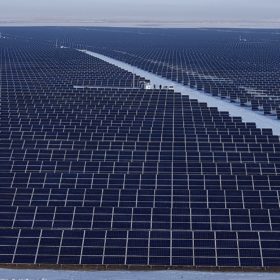
100 MW Saran solar park commissioned in Kazakhstan
The SES Saran solar project is in the Karaganda region. The project was financed by the European Bank for Reconstruction and Development and built by German developer Goldbeck.
EBRD turns to carbon pricing for future project assessments
The European development bank will amend its methodology to determine the financial viability of energy projects. Putting a price on the environmental and societal effects of air pollution, the EBRD is likely to funnel more funds into renewables.
